Hi Kathy- I am a little confused. The horizontal bars on the top and bottom are toned as if they are cylinders. The middle horizontal bar and the vertical bar look flat because of how they are toned. There is not a range of tones to convey their form and also equally shading both sides of a bar where another bar crosses it makes the bar look like it is nestled into the crossing bar rather than laying on top of it. I think the lesson is to tone the bars as if they are cylinders. There are often things around the house you can use to set up a reference model. Pencils, pens, chopsticks, etc. It also gives you the chance to work on creating smooth, even layers of toning.
Hi Doug Thanks for your comments. Two things, I have not had a lot of practice at uploading photos, I drew this bar so the long bar is the horizontal bar not the 3 short bars. Secondly, I have now realised that I stepped outside the lesson requirements and left the bar a bit flat to see what is looked like so thanks I will redo the bar.

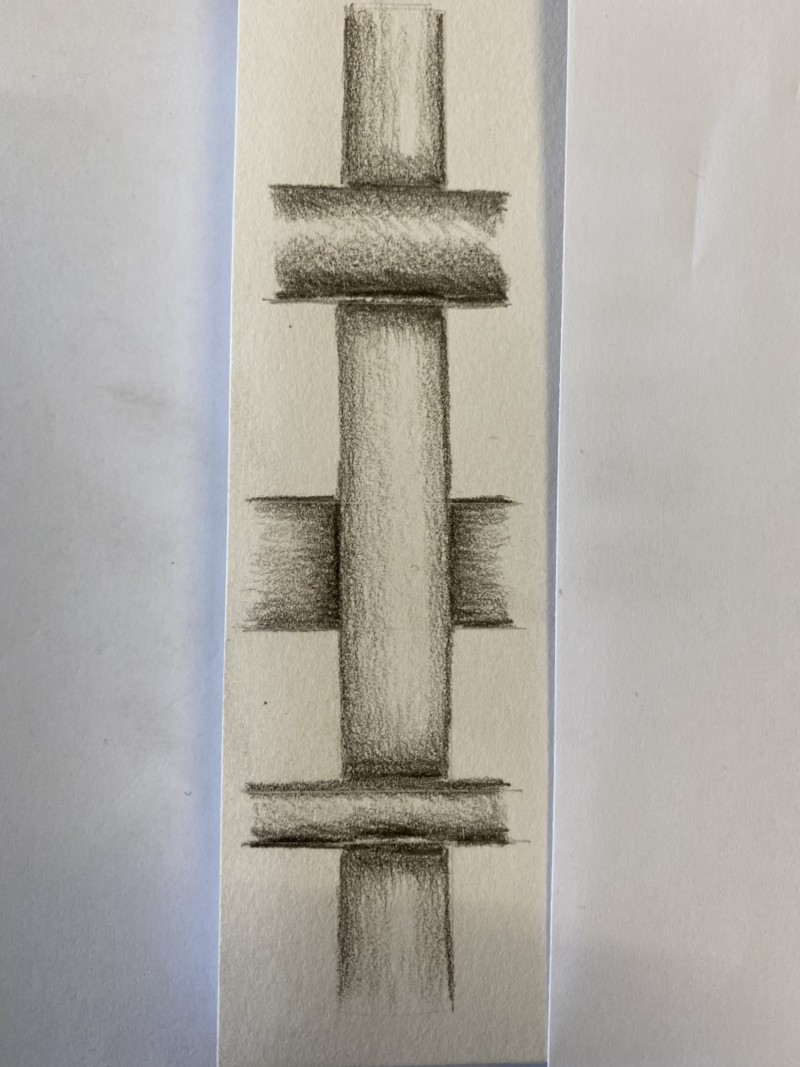
Hi Kathy- I am a little confused. The horizontal bars on the top and bottom are toned as if they are cylinders. The middle horizontal bar and the vertical bar look flat because of how they are toned. There is not a range of tones to convey their form and also equally shading both sides of a bar where another bar crosses it makes the bar look like it is nestled into the crossing bar rather than laying on top of it. I think the lesson is to tone the bars as if they are cylinders. There are often things around the house you can use to set up a reference model. Pencils, pens, chopsticks, etc. It also gives you the chance to work on creating smooth, even layers of toning.
Hi Doug Thanks for your comments. Two things, I have not had a lot of practice at uploading photos, I drew this bar so the long bar is the horizontal bar not the 3 short bars. Secondly, I have now realised that I stepped outside the lesson requirements and left the bar a bit flat to see what is looked like so thanks I will redo the bar.