Hi Julie- looking back at your branch study posts you did a good job of showing the range of tones to create form on a cylinder. On this lesson, each one of these four elongated cylinders has to have the 9 different tones from the highlight (color of the paper) thru black as you did on the branches. Think of these cylinders as four dowels, or pencils, or chopsticks (these are good common household items you might have to set up a model). Once each is toned for form, then you add the tones that indicate the shadows where the dowels overlap. Be aware that you do not need the dark toning on the left side of the horizontal dowels or the top of the vertical dowel as they are closest to your light source.

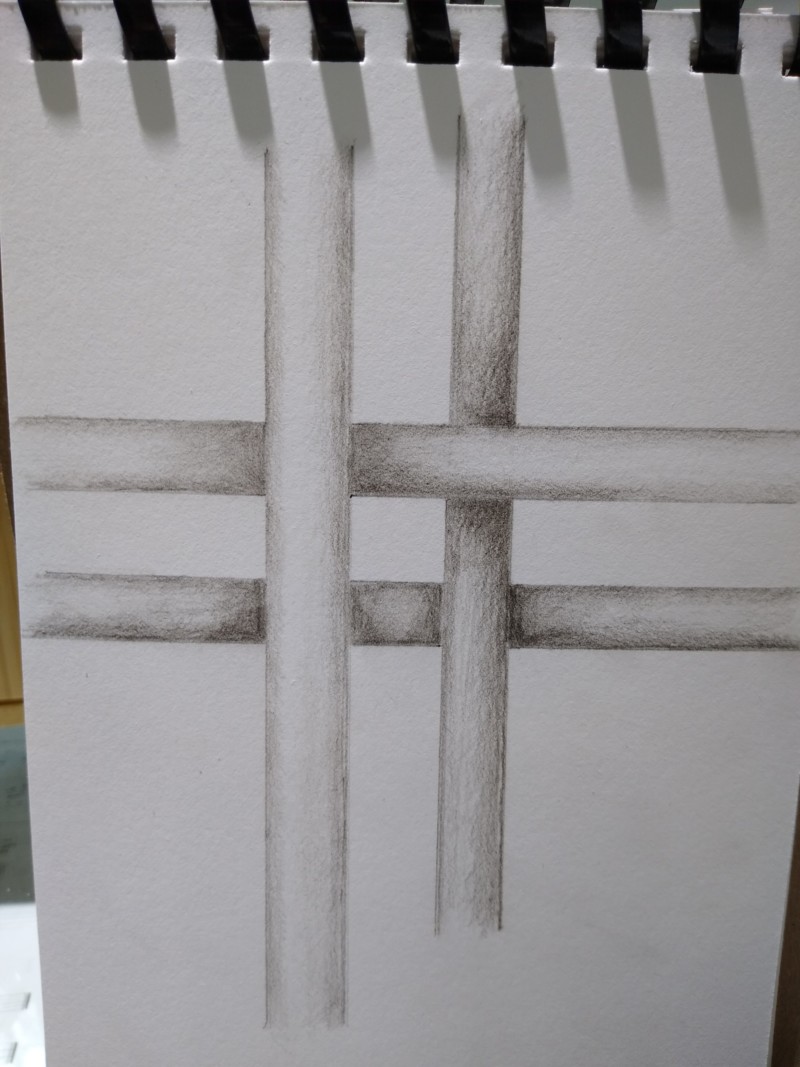
Hi Julie- looking back at your branch study posts you did a good job of showing the range of tones to create form on a cylinder. On this lesson, each one of these four elongated cylinders has to have the 9 different tones from the highlight (color of the paper) thru black as you did on the branches. Think of these cylinders as four dowels, or pencils, or chopsticks (these are good common household items you might have to set up a model). Once each is toned for form, then you add the tones that indicate the shadows where the dowels overlap. Be aware that you do not need the dark toning on the left side of the horizontal dowels or the top of the vertical dowel as they are closest to your light source.
I was thinking slats, not elongated cylinders. Back to the drawing board…