Shared Histories. Shared Environments. Shared Arts.
Encouraging Diversity & Reciprocal Respect in Scientific Botanical Illustration
The History of Botanical Drawing & Decolonizing the Future of Botanical Art
By Emet Lipson & the Draw Botanical Team
“How we relate to one another is essential to environmentalism. If you’re not talking about human rights, economic equity, mutual respect, you’re not really dealing with the environment. Trees are wonderful. Birds and flowers are wonderful. They’re all part of the environment. But we’re part of the environment too and how we treat each other is fundamental.”3 [Excerpt from John Francis interview with Grist]
Black History is History and should be celebrated always. It’s important for us to continue the conversation about decolonizing botanical illustration, while highlighting Black excellence, Black joy, and Black culture within a botanical frame. Find BIPOC botanical artists to support by scrolling through this post.
We can’t change the past, but we can strive to decolonize our present into a future world where we all feel welcome. “Decolonization is both a movement and an ideology, to acknowledge, examine, challenge, and eliminate the disproportionate legacy of white European thought. So, in a nutshell, it’s about decentering white supremacy over the world, and particularly in the natural world.”10 Diversity is how our world thrives, and we want to aid in that thriving by educating ourselves and reflecting on our physical and virtual spaces to ensure we are not only appreciating, but also amplifying voices different from our own/voices that have been silenced/marginalized.
“If we aim to start a conversation about decolonizing botanical science, we needed to start with acknowledging the legacy of the history of botanical science and colonial histories and how the absence of the Black experience perpetuates the ongoing exclusion of Black people within modern society by whitewashing history where racism, science, and colonial power are inherently entwined.”10
The History of Botanical Art
Why was Botanical Illustration Born?
To Help Identify Plant Species for Healing (Before Photography)
Botanical illustration began as the primary source of accurate and useful visual information for botanical scientists, pharmacists and physicians, gardeners, and more.12 While the first documented illustrator of plants for scientific purposes dates back to the 1st century BCE, it wasn’t until the 4th century BCE that healers and sorcerers realized that they needed to create a proper reference of herbal plants and their various medicinal uses. This is when botanical illustration began to play a huge part in studying and classifying plants (source). Between 50 and 70 CE, “an illustrated book titled De Materia Medica was created by Greek botanist Pedanius Dioscorides to help readers identify plant species for medicinal purposes.”12

Only For the White & Wealthy
There is much documentation surrounding botanical art history in Europe, how it expanded outside of herbals during the Renaissance,5 how biology and botany developed with the focus on finding new species, and how beautiful collections and books of botanical art were sponsored by wealthy patrons.13 During this time, many wealthy amateur horticulturists in Europe cultivated “exotic plants, notably tulips, in their gardens and greenhouses” and “employed artists to accurately record their treasured specimens.”5
As mentioned in our blog post, Plant Pride: Celebrating Diversity, “Carl Linnaeus was the first taxonomist to consistently use shorter names for organisms, creating the classification system still used today. His hierarchical system reflected 18th-century culture and prioritized ‘male’ organs, giving them more taxonomic importance than ‘female’ organs. ‘Linnaeus’ judgments were not based on empirical evidence, but rather on traditional tenets of gender-related bias.’” But the fabricated truths did not end here.
Historical Roots & Persistent Legacies of Racism in Science
Published through Distillations, the Science History Institute’s highly acclaimed digital content platform, Innate: How Science Invented the Myth of Race is a podcast and magazine project that explores the historical roots and persistent legacies of racism in American science and medicine. Co-host Alexis Pedrick explains:
“As Europeans colonized the globe, they encountered countless new things and became obsessed with categorizing them. They even made a whole new field of science taxonomy. And the father of taxonomy, the guy responsible for how we see the whole natural world. That was a Swedish botanist and doctor named Carl Linnaeus. He published his catalog of living things, Systema Naturae in 1735. In the 10th edition, he broke down homo-sapiens into four categories, Americanus, Asiatic, Afer, and Europaeus. And he color coded them red, yellow, black, and white…
… it wasn’t just a matter of categorizing, there was a hierarchy with white at the top, and Afer or black at the bottom. And the personality traits, Linnaeus added on, not factual. It’s no mistake that they were based on the same biases that justified the slave trade.
Linnaeus wasn’t working in a vacuum, he was swimming in the same societal goop as everyone else, one that had a lot of stereotypes and assumptions floating in it. And one of those cultural assumptions was that Europe was the pinnacle of civilization. This is Angela Saini, the author of Superior: The Return of Race Science.”
Powerful People can Fabricate “Facts”
Angela Saini: “They framed it not just as kind of a historical fact, but as a natural fact that, ‘We are better than everybody else and we have the right to go into other countries and colonize them because we are more civilized than them. We are a force and we have the right to do this.’ And that idea then inevitably becomes woven into the way that people think about human difference. If you tie your cultural or economic superiority to skin color, for instance, then what you are basically saying is that anybody who’s not white cannot do this. Not that they have not done that, or they will not do it, but they cannot do it.” Read more here
We are all “swimming in the same societal goop.” Why do we continue to enforce cultural assumptions that were based on biases instead of evidence?
You’ll notice that though there is much known about botanical art history in Europe, there is little known outside of that. This is not because of a lack of knowledge, but because of a cultural attitude that white people were the only ones worth remembering.
In this discussion, it is essential to remember that those in power (wealthy, white, cisgender, heterosexual men) imposed their cultural rules upon every facet of society, including our understanding of nature and who should and could have access to natural spaces. Many Black Indigenous People Of Color (BIPOC) possessed knowledge of many indigenous plants, including their variety of uses, but only once they shared that knowledge with wealthy colonizers were these “new” species considered “discovered” by these white men (with little to no mention of the original BIPOC experts who helped them).
When drawing plants, we focus on our connection and get to know the plant personally, but when we talk about the plants we draw, we use either their English or Latin names. What does that mean? It means that even though we try to listen to the plant itself, we still think in colonial terms, and those colonial terms exclude so many.
Uriel Orlow, author of Theatrum Botanicum, explains European colonialism in South Africa and elsewhere as “both preceded and accompanied by expeditions that aimed at charting the territory and classifying its natural resources, in turn paving the way for occupation and exploitation. To be sure, the supposed discovery and subsequent naming and cataloguing of plants—which were of course already known to the indigenous population—disregarded and obliterated existing indigenous plant names and botanical knowledge, imposing the Linnaean system of classification with its particular European rationality and universal ambitions. What does it mean for this epistemic violence to continue today, over twenty years after the official end of apartheid? How were plants involved in the history of colonialism as active participants? What role do they play today?” (source)
Though Botanical Art seemed to be reserved for the white and wealthy, BIPOC found ways to capture natural beauty in art, too. One example from the 1950s to 1980s is a small collective of primarily self-taught African American artists painted landscapes in (segregated) Florida. Though museums and art galleries refused to buy their work, the “Florida Highwaymen” sold their works to consumers along Florida’s Atlantic coast out of the trunks of their cars.3
Hidden Figures
Natural history museums are more racist than anyone would like to admit, due in part to the “hard science” lens used in creating natural history exhibits to portray plants as taxonomists see them.6 Though “hard science” may seem like an objective lens through which to view natural history collections, it doesn’t acknowledge broader cultural perspectives, including how colonial powers shaped those collections. Included in a fascinating article written by Subhadra Das and Miranda Lowe is a section on hidden figures: “the collectors, elders, artists, and assistants of all kinds from porters to cooks to scouts, who were essential to the work collectors did all over the world.”6
Kwasimukamba, or Graman Quassi, was a healer and botanist from Ghana who was taken as a child slave to a Dutch colony.4 He bought his freedom with financial success that “was due in part to his discovery, around 1730, that Quassia amara could be used to treat infections caused by intestinal parasites if drunk as a bitter tea.”4 Carl Linnaeus officially established the genus within European botany and is considered the founder of the genus, but in this instance, he gave Quassi a rare shout-out by naming the plant after him.4
Head of Collections at the Linnean Society, Dr. Isabelle Charmantier, talks in this video about how, “Artists of collections of botanical work are usually unnamed and remain unknown today. 11 of the 147 drawings [in the Linnean Society’s collection] were signed by John Tyley from Antigua, a free person of color, hired by Alexander Anderson when he was curator of the St. Vincent Botanic Gardens from 1785 to 1811.”7
Ali, a teenager from Malay, was servant to Alfred Russel Wallace, a co-founder of evolution. “Ali contributed substantially to collecting a large proportion of the 125,600 specimens which were foundational to Wallace’s work.”4 Charles Darwin also could not have co-founded evolution without the knowledge of taxidermy, taught to him by John Edmonstone, a Guyanese freed slave, from 1831 to 1836.4
Graman Quassi, John Tyley, Ali, and John Edmonstone are only four people we never learned about in history class. There are so many more whose contributions were fundamental to our understanding of the world, but who were intentionally excluded from records, not because of any factual evidence, just due to racism and colonial powers’ desire to claim everything as their own (even if it originally belonged to others, especially if it originally belonged to those they deemed inferior).
Black Excellence
From Former Trailblazers to Current Creators
Celebrate Black Joy, Culture, and Success in the Botanical Art World
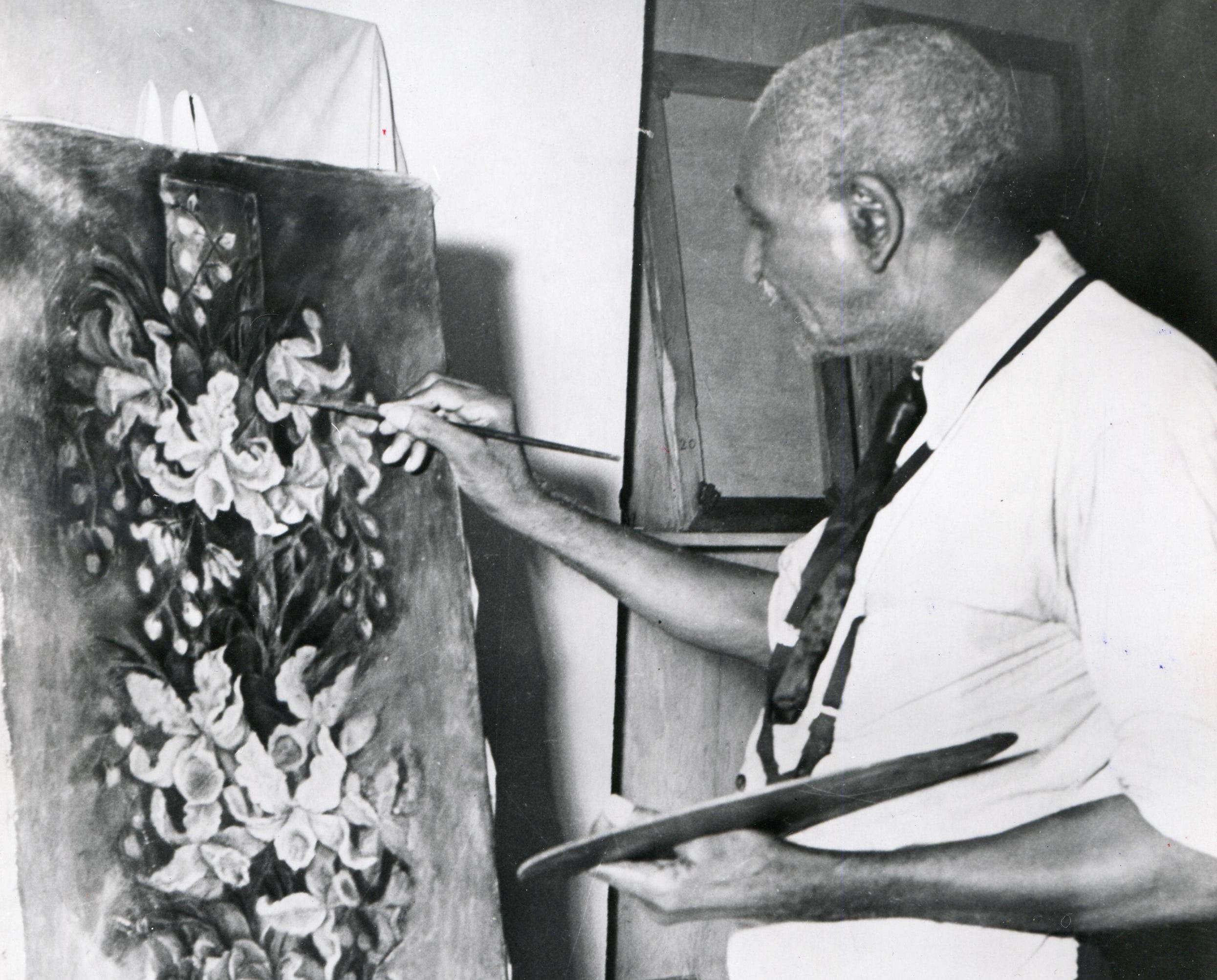
George Washington Carver
You may know George Washington Carver for his impactful research on peanuts, but he was also a talented botanical artist! He originally enrolled in college to study art and piano. “Despite his talents, [his art teacher, Etta] Budd worried that Carver wouldn’t be able to make a living as an artist, so she suggested that he take his plant illustration skills to the botany department at Iowa State Agricultural College,” where he received his bachelor’s degree in 1894 and his master’s in 1896 before starting a research position at Tuskegee Institute.2 In his research, he developed paints from peanuts and other plants that he used for his art.
“In a way, Carver’s career had come full circle, from painting flowers for science to turning plants into paint.”2
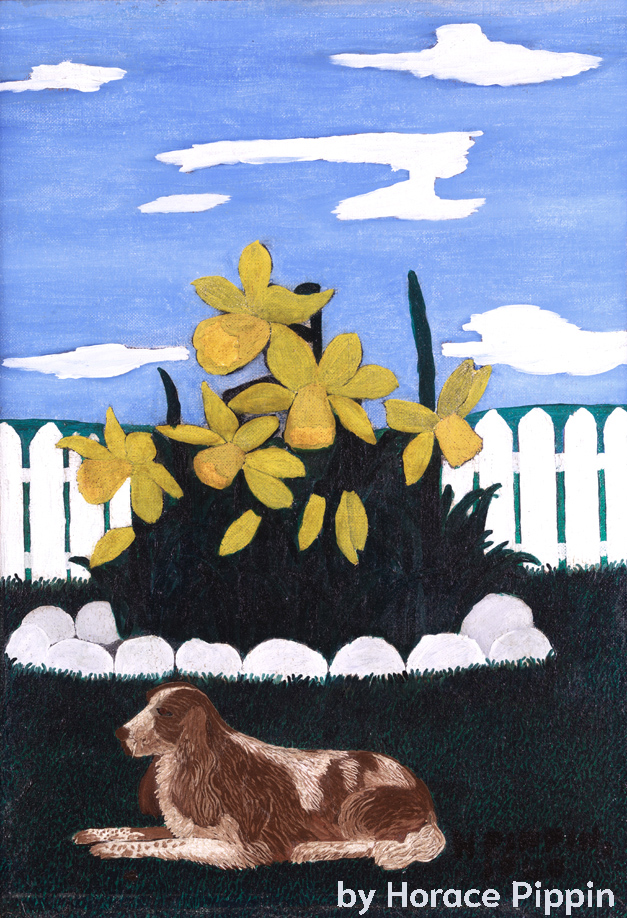
Horace Pippin
Many exceptional artists of color found beautiful ways to portray nature that weren’t scientific botanical illustrations, including Horace Pippin. “‘Pictures just come to my mind,” Pippin famously said, “and I tell my heart to go ahead.’”1 Pippin was born in Pennsylvania and grew up in Goshen, New York, attending segregated schools until he was 15, when he began working to support his ailing mother. “During his life, Pippin was best known for his landscapes, domestic scenes, and religious paintings,”1 but he also “painted at least two dozen floral still lifes in the 1940s.”11
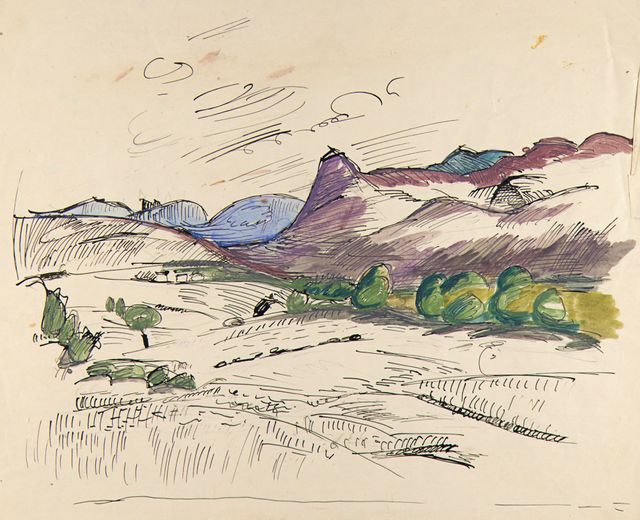
William Henry Johnson
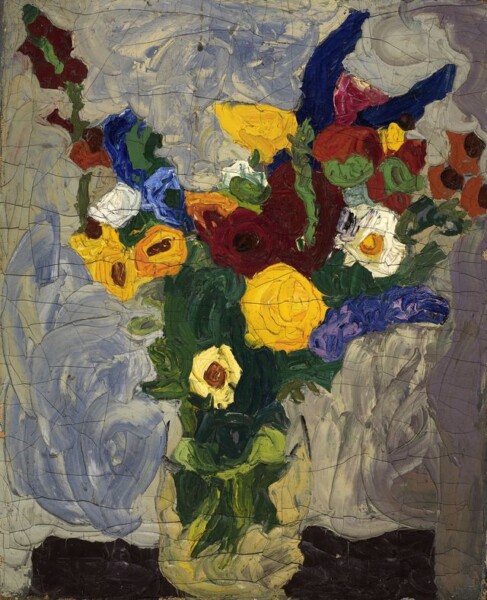
William Henry Johnson left his South Carolina home to journey north toward the beginning of the Great Migration when he was 17 years old. He stayed at his uncle’s place in Harlem and worked as a stevedore, cook, and porter to save the money to attend the National Academy of Design. He studied European modernism and expressionist landscapes abroad before returning to New York to “paint his own people.” (source) Though much of his work paints culture, bodies, and places, he has a few paintings with botanical subjects including sunflowers, a flower bouquet, and apples.
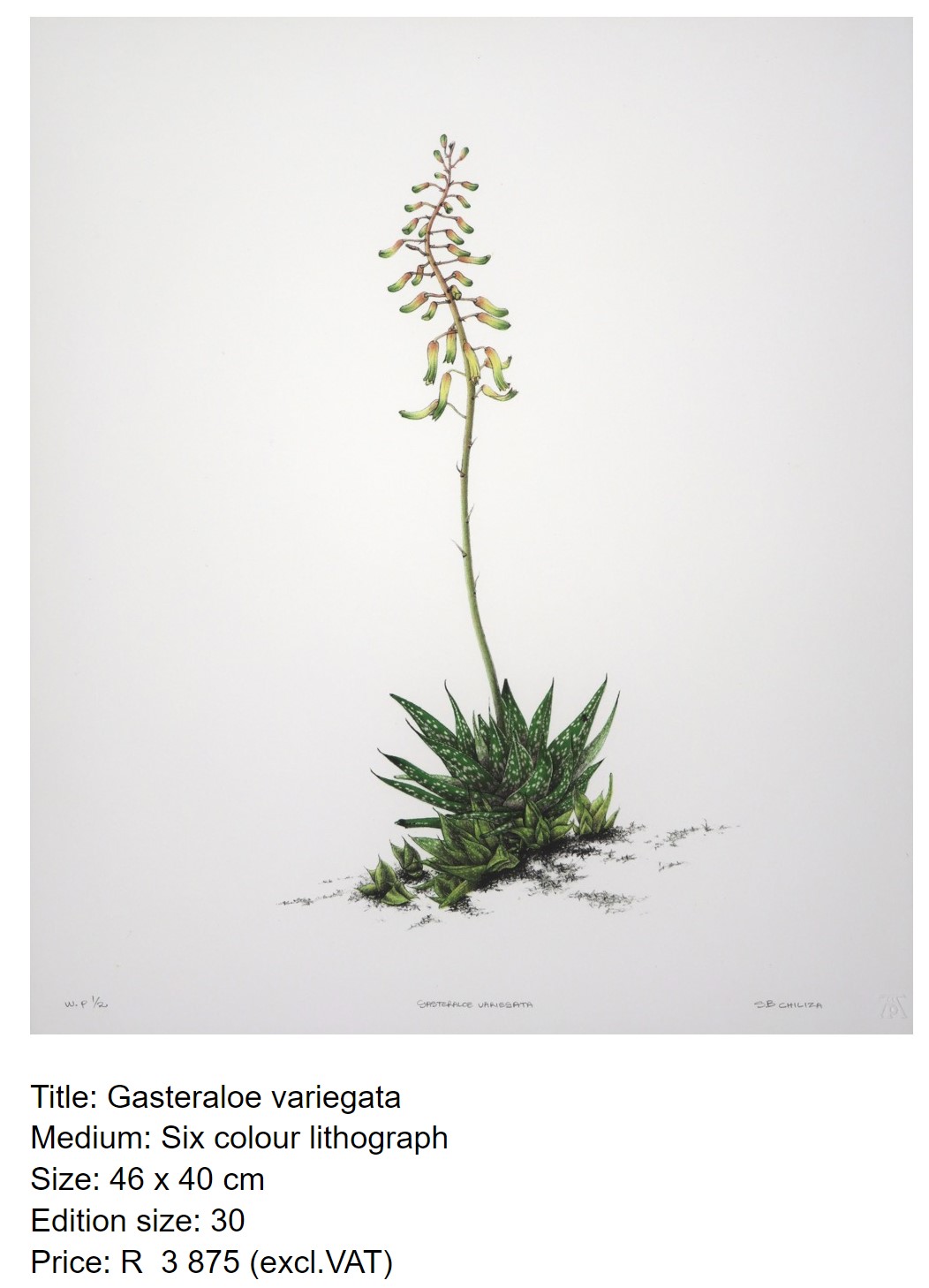
Sibonelo Chiliza
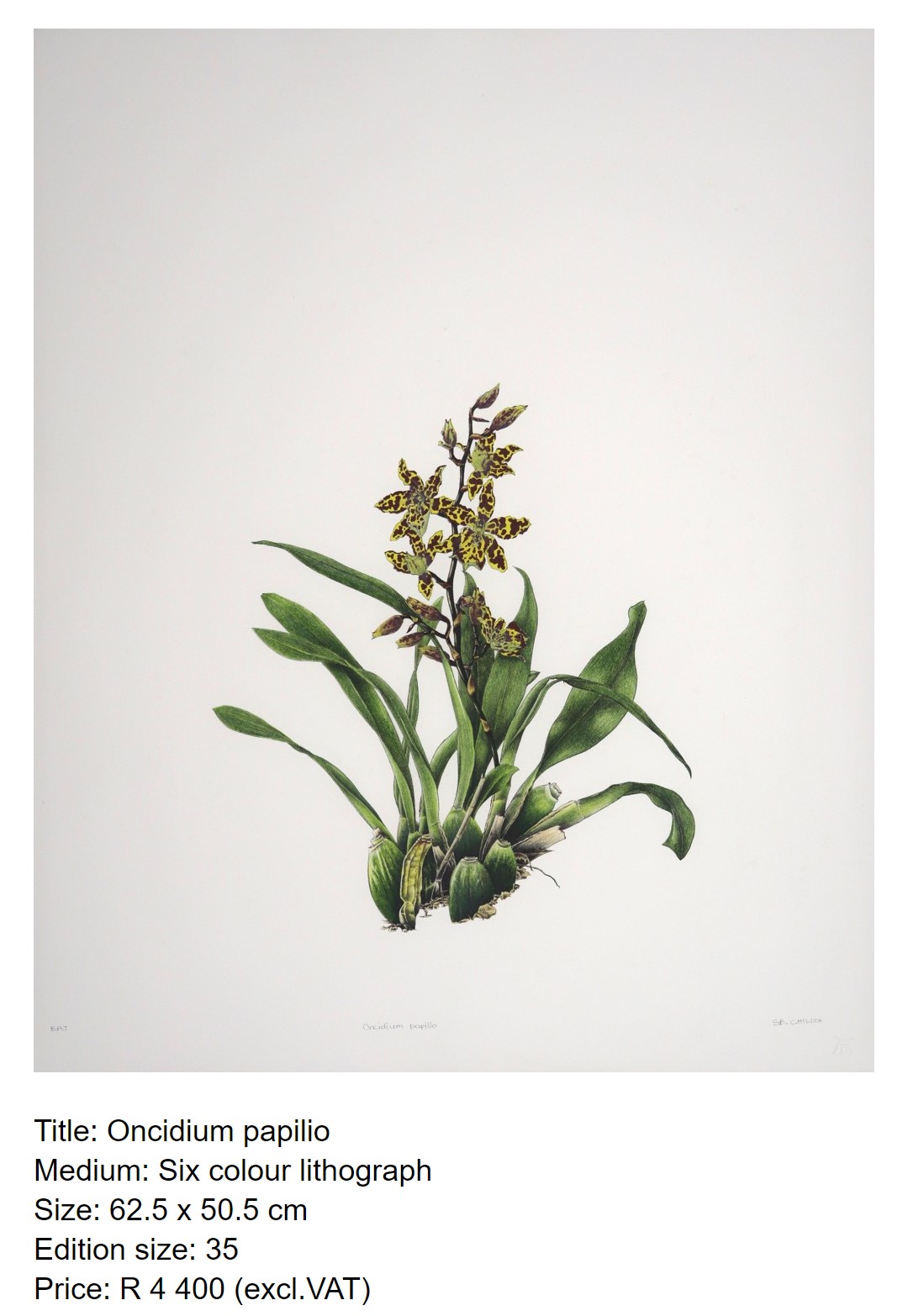
Despite all efforts to reserve botanical illustration for the (white) elite, there are a few renowned botanical artists of color, including Sibonelo Chiliza. Born in 1979 in Mtwalume (near Port Shepstone), Chiliza was always brilliant at design and realistically drawing biology specimens.8 The first time that Chiliza drew plants in color was during his second year studying Textile Design & Technology at the Durban University of Technology when his class was looking for textile design inspiration in the Durban Botanical Garden.8
“When asked what it is about plants that he enjoys, Sibonelo Chiliza explains, ‘it has to do with the freshness and colour. When you are sitting out there and you are working you don’t feel like you are working, in a botanical garden you hardly get people disturbing you.’”8 Chiliza works from live plant subjects and takes accurate measurements to scale, as many of us do following the Draw Botanical method. He uses Lyra pencils, which are “oil based and have an incredible range of colours. For Chiliza the complicated part of botanical art is getting started, in planning the composition. He usually starts at the bottom of the plant, meticulously working his way up.”8
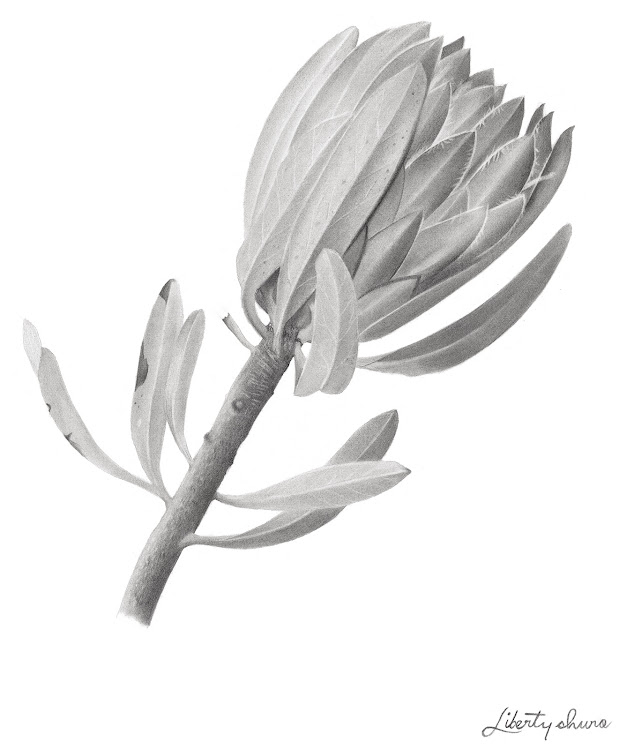
Liberty Shuro
Liberty Shuro is most well known for “his large-scale, photo-real drawings of endangered wildlife species.” He has always been an artist, but because he spent a lot of time pursuing other fields to please his parents, he didn’t receive much formal art training.9 Shuro and Chiliza are both involved in the Grootbos Florilegium, whose vision is that “this important collection of botanical work will grow and expand beyond the borders of Grootbos itself and out into the communities that surround it. Increasingly, there is an awareness that historical modes of art production and collecting need to work harder to reflect new and exciting voices in the field, and integrate with social practice. Through their involvement in the Grootbos Florilegium, Chiliza and Shuro are positioning themselves at the cusp of this movement.”9
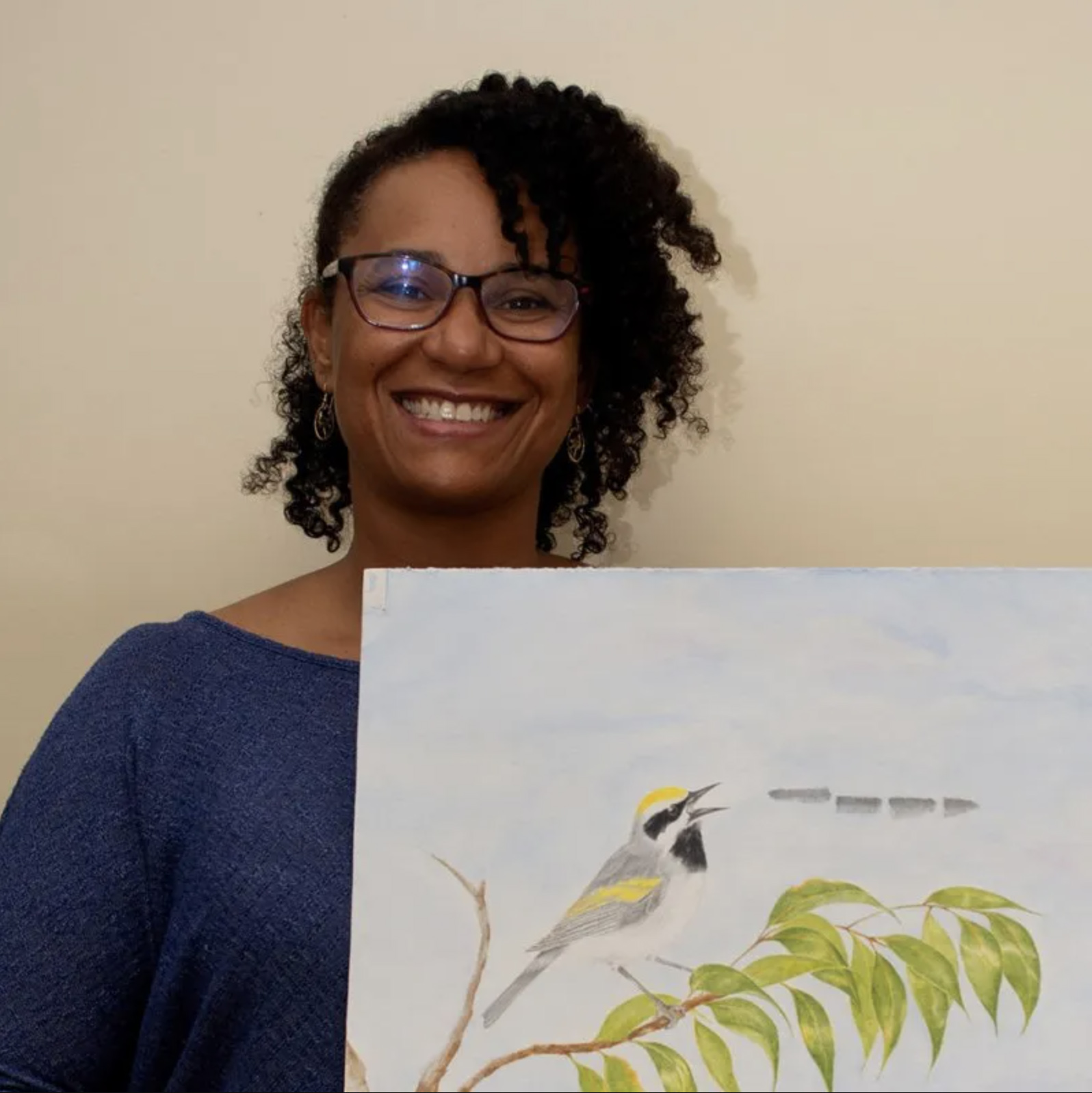
Natasza Fontaine
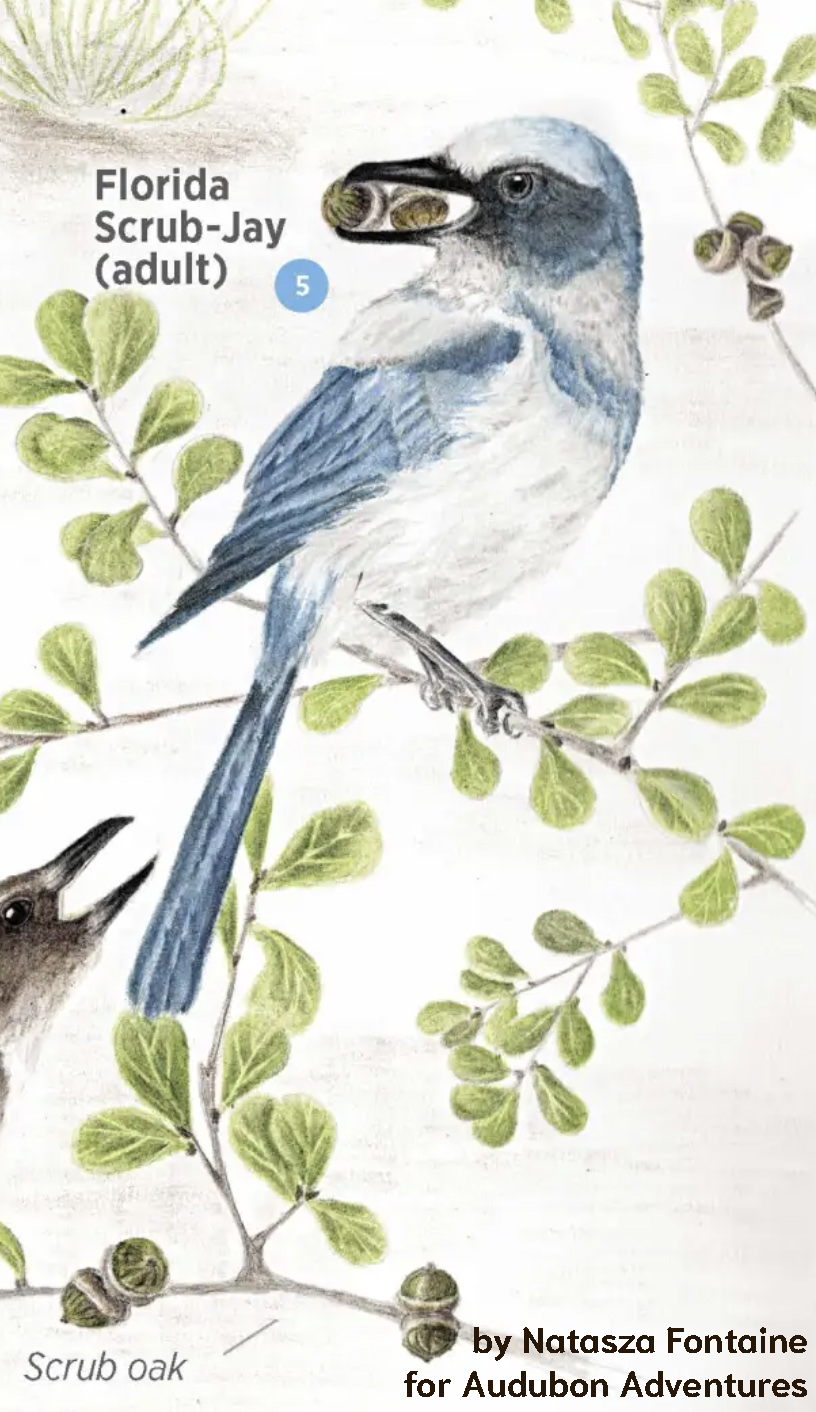
Natasza Fontaine is an early-career avian ecologist, avid recordist, amateur botanist, and natural science illustrator. She is part of the #BlackBotanistsWeek team who describe her on their website as a natural science illustrator, amateur photographer, and biology graduate student at Florida State University. Her experience working at the New York Botanical Garden and FSU herbaria has developed her passion for collecting and mounting plant specimens. Her love of plants is deeply intertwined with her love of birds. Her thesis is focused on understanding plant diversity and distribution to assess bird habitat associations for conservation management. (source)
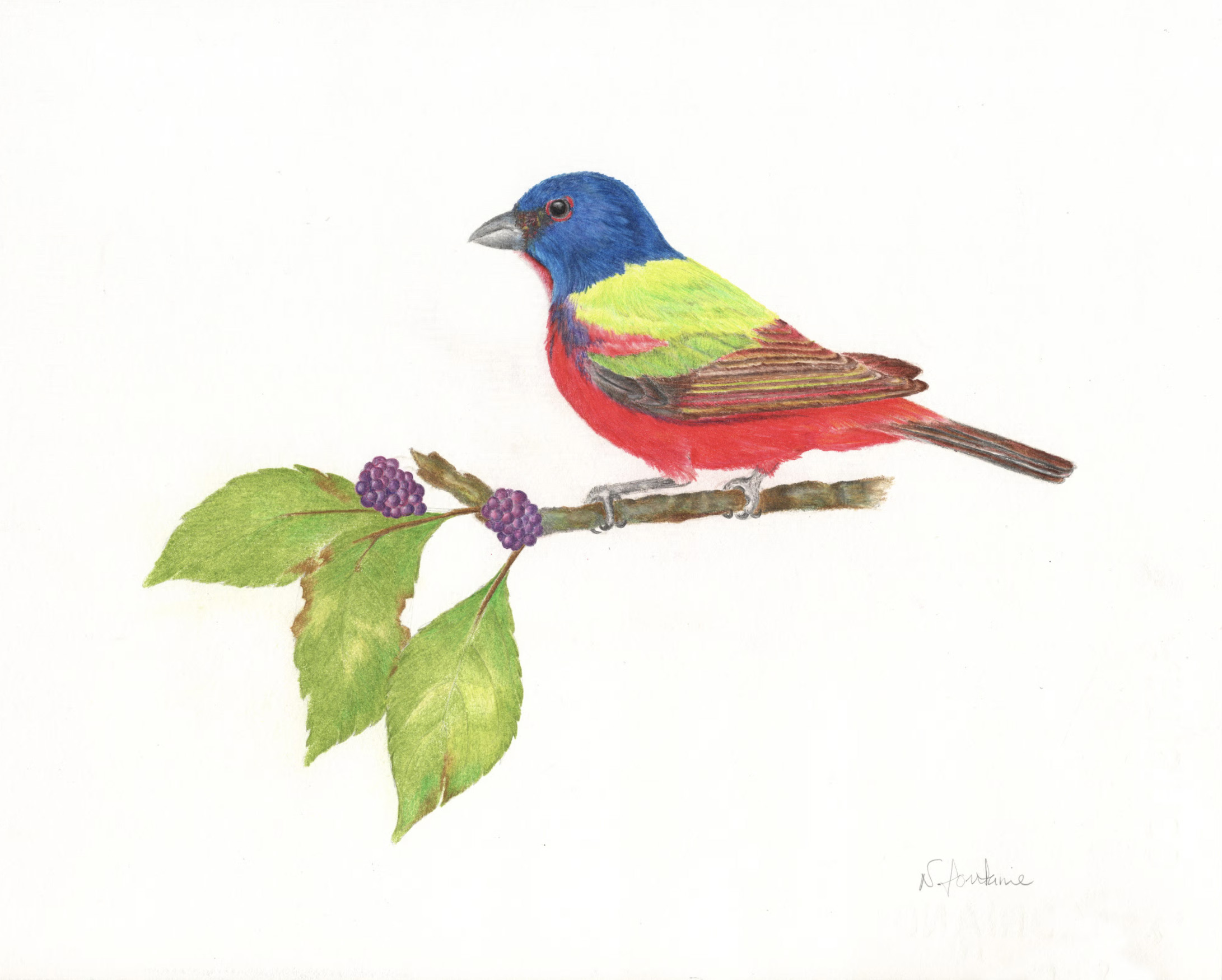
In this Audubon interview, Natasza says,“I would like people to be inspired to find more out about the creature in the illustration and to consider connections. So, for example, in my Painted Bunting illustration (pictured above) I added the American beautyberry plant. I would like the viewer to wonder “Hmm that’s a bright purple fruit, what is it and why would it be drawn with this bird, what is the connection? Where was she going with this idea?” In most of my illustrations, I like to have fun presenting the not-so-obvious connections between my subjects…. Essentially, I want everyone viewing my work to leave with a sense of wonder and curiosity about the natural world.” (source)
To learn more about Natasza Fontaine, here is her website.
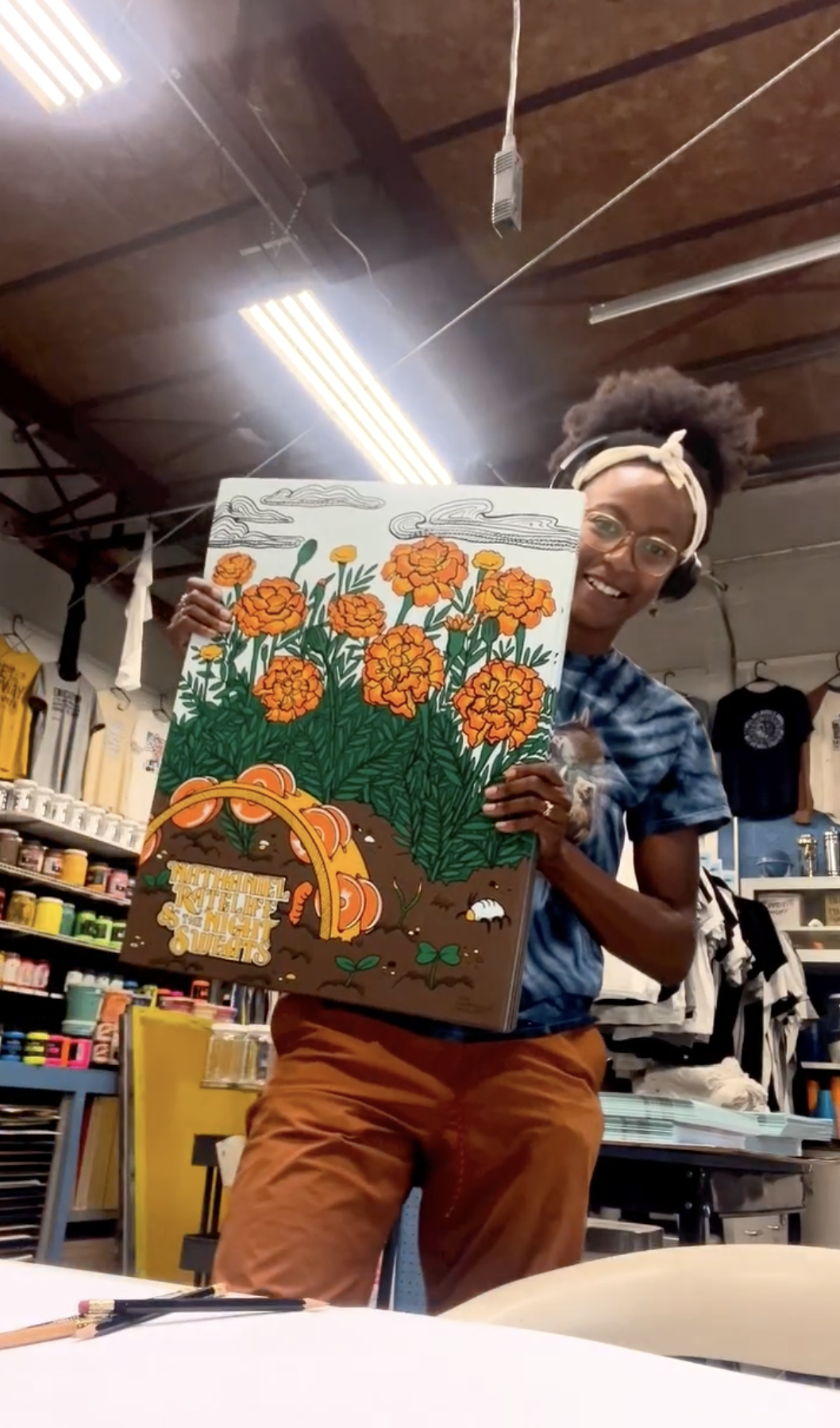
Latasha Dunston Greene
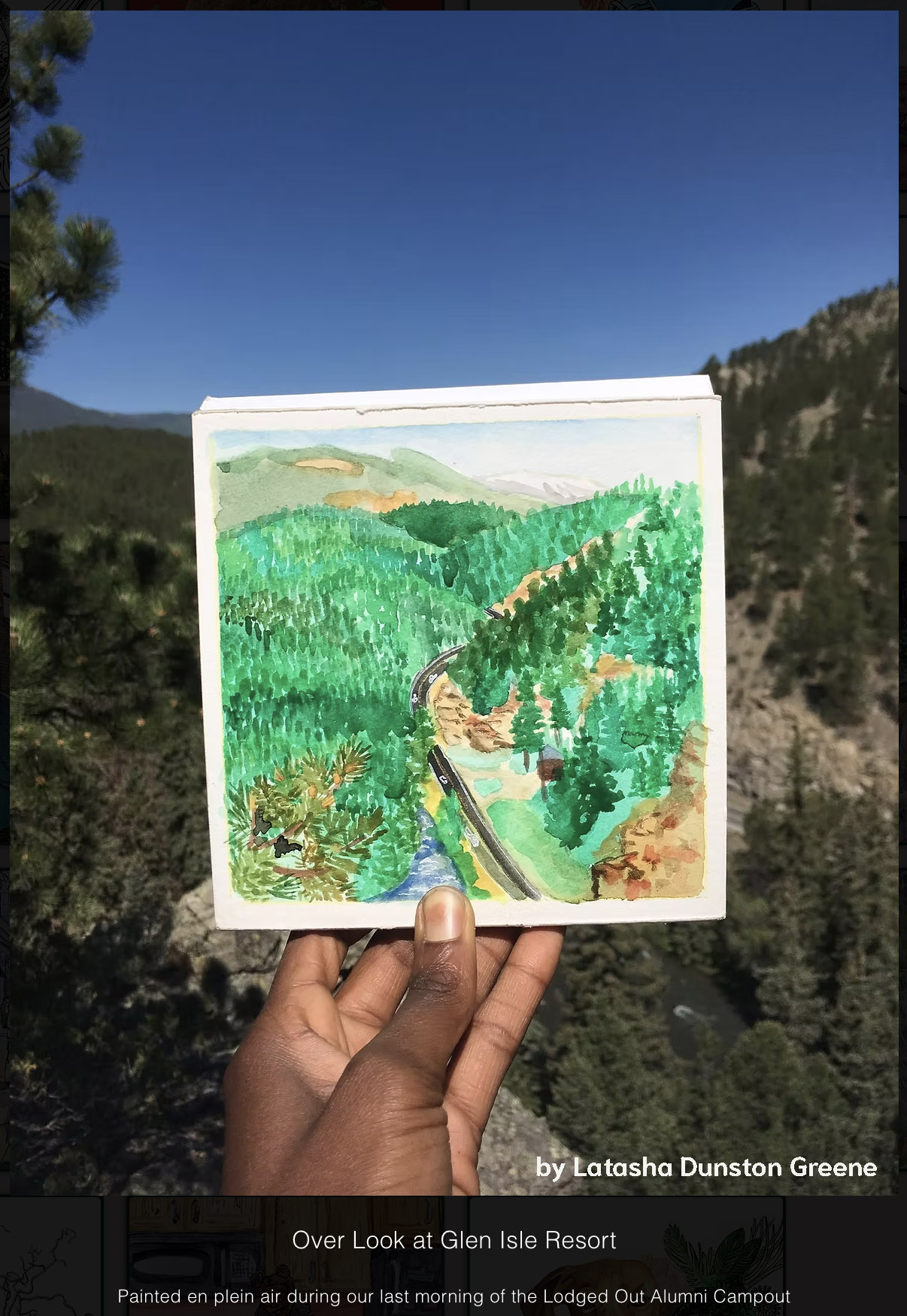
Latasha Dunston Greene, AKA Tasha, is an illustrator, painter, and plant lover based in Denver, CO, who creates mainly with watercolor, ink, and digital programs. She received a BFA from Virginia Commonwealth University School of the Arts with a concentration in Scientific and Medical Illustration. When Tasha is not in her studio, you can find her cooking, tending to her plants, hiking and camping, or traveling to somewhere new. She says, “My love of the outdoors is a vital part of my identity and I try and share that passion with as many as I can to help show that the outdoors is for everyone!” (source)
To learn more about Latasha Dunston Greene, here is her website and Instagram @jitterbug_art.
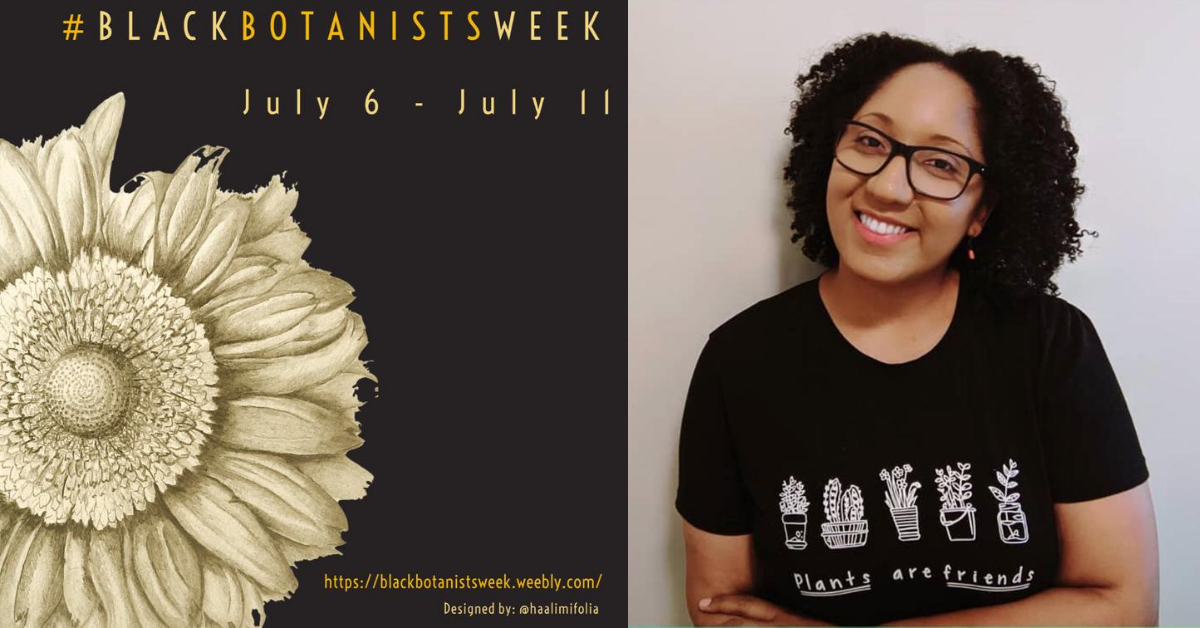
Dr. Tanisha Williams – Black Botanists Week
Hello Plant Friend! Dr. Tanisha Williams is a Washington, DC native that is passionate about plants, science policy, science communication, and social justice. She is a plant ecologist and botanist who founded Black Botanists Week, an online campaign established in 2020 to promote, highlight, and create a safe space for Black, Indigenous, and People of Color (BIPOC) who love plants. The initiative highlights the diverse contributions of Black botanists, horticulturalists, and enthusiasts worldwide, addressing underrepresentation in the field. (source) As William says, “Representation and inclusion are how we solve problems, gain knowledge, and make the world a better place.” (source)
To learn more about Dr. Tanisha Williams, here is her website, Instagram @t_marie_wms, and the Black Botanists Week website.
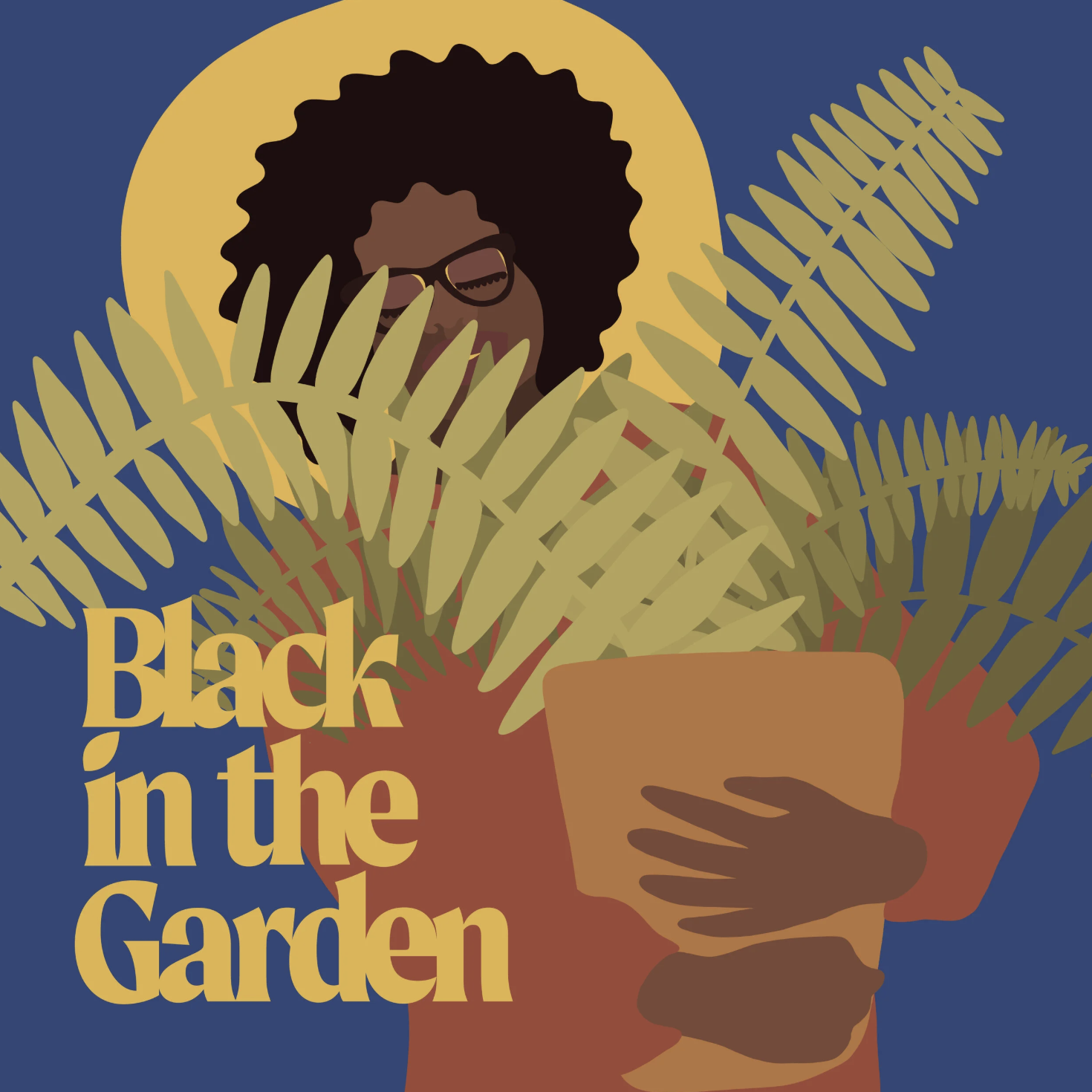
Colah B Tawkin + Paula Champagne – Black in the Garden
Colah B Tawkin is equal parts talent, creativity and vision… a ‘plantrepreneur’, podcaster, and your guide to all things Black and botanical. This interview with Colah says, “In 2019, Colah launched the Black in the Garden Podcast, with the goal of creating a platform to uplift Black voices in the garden podcast space. She speaks with Black plant keepers, artists, entomologists, botanists, parents, environmentalists, authors, and more who share about their passions and lived experiences. When she started gardening as a mom, she found that garden podcasts were largely dominated by White speakers and yearned for a perspective that resonated with her own.”
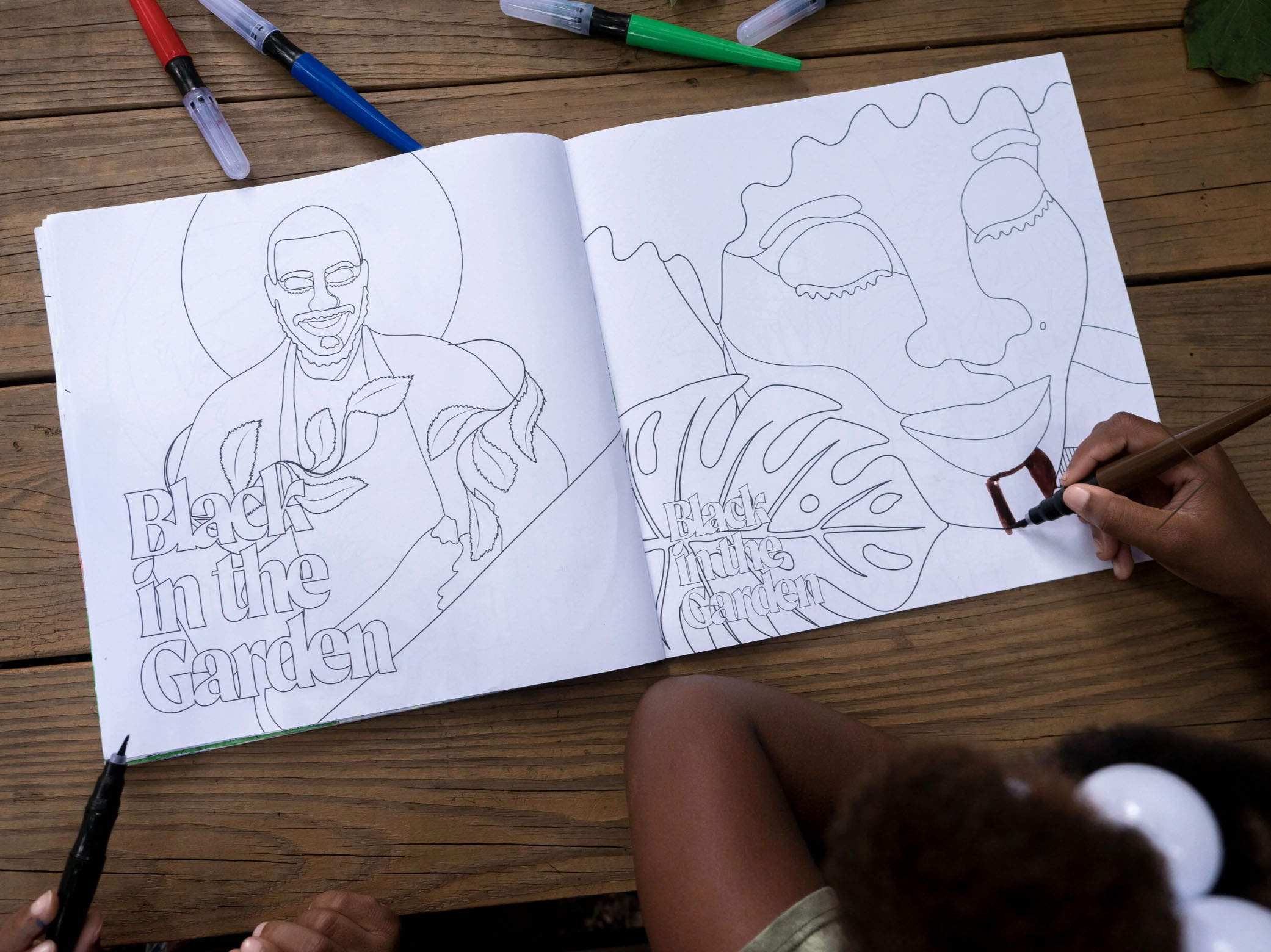
“Colah’s creativity and desire to produce content for Black plant lovers has also manifested in the Black in the Garden Coloring Book, illustrated by Paula Champagne. The book is a collection of peaceful, calming, and beautifully-outlined images of Black gardeners, created with the aim of being used as a tool for Black kids to have visual examples of Black people involved with plants.” (source)
To learn more about Colah B Tawkin, here is her Black in the Garden website and Instagram @blackinthegarden.
To learn more about Paula Champagne, here is her website.
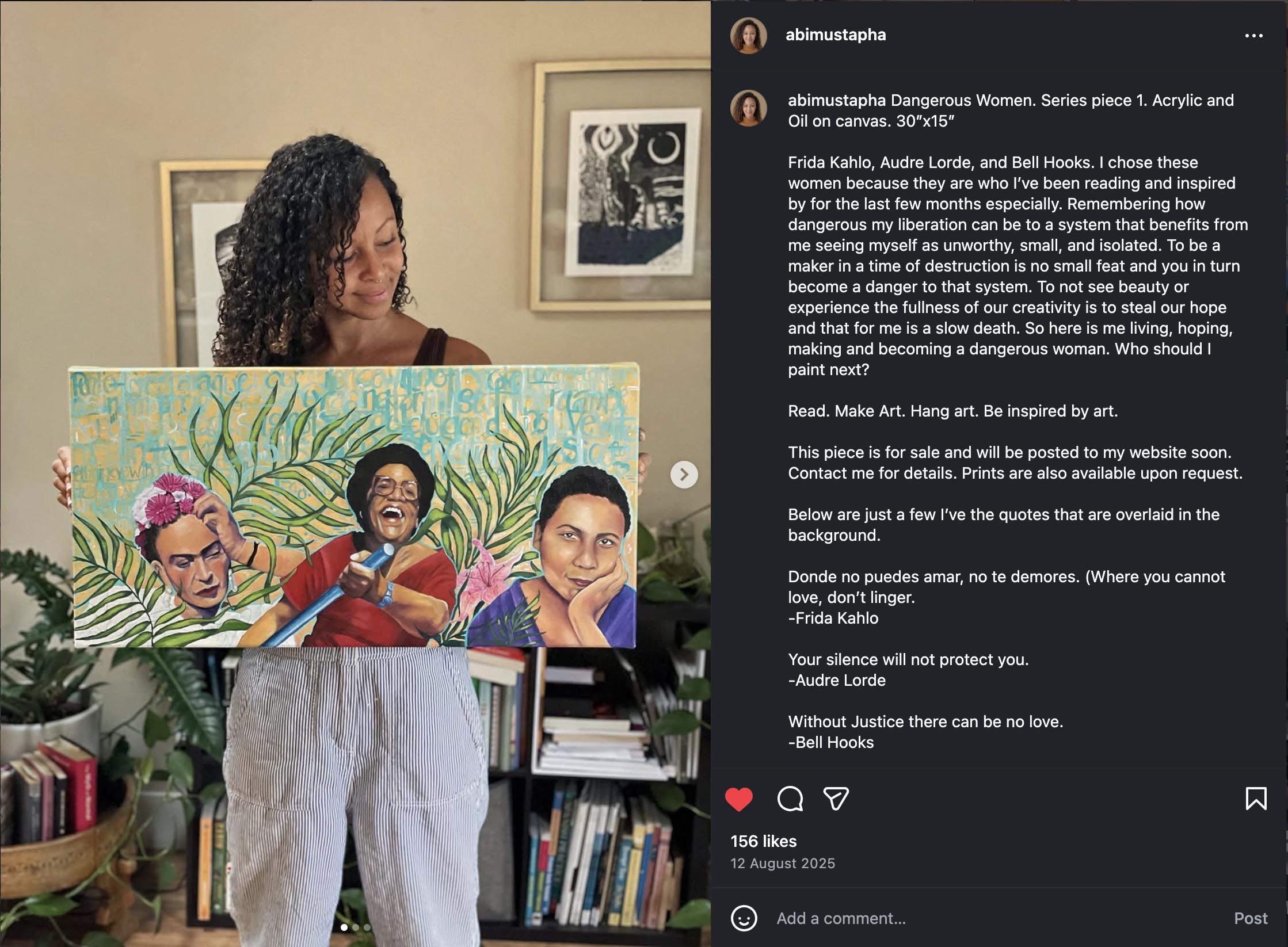
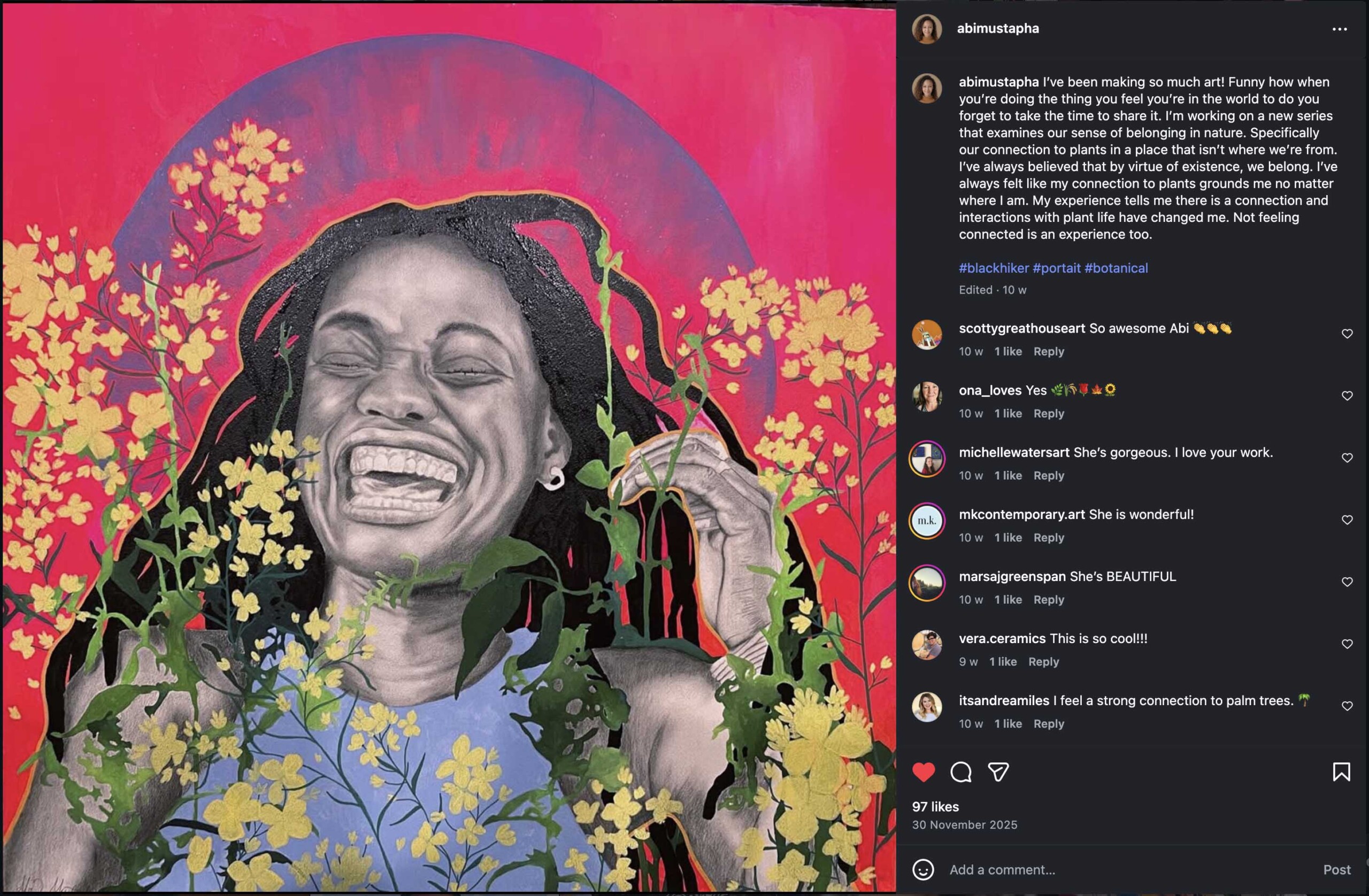
Abi Mustapha
Abi Mustapha is a Sierra Leonean/American Contemporary Artist and a dedicated community builder. She earned a bachelors in Political Science with a focus on Sustainability from Indiana University before embarking on a career in sustainable agriculture and permaculture. In 2013, she made the decision to relocate from Indiana to the Bay Area to pursue her passion for art.
To learn more about Abi Mustapha, here is her website, Instagram @abimustapha, YouTube @AbiMustapha-creates, and Patreon.
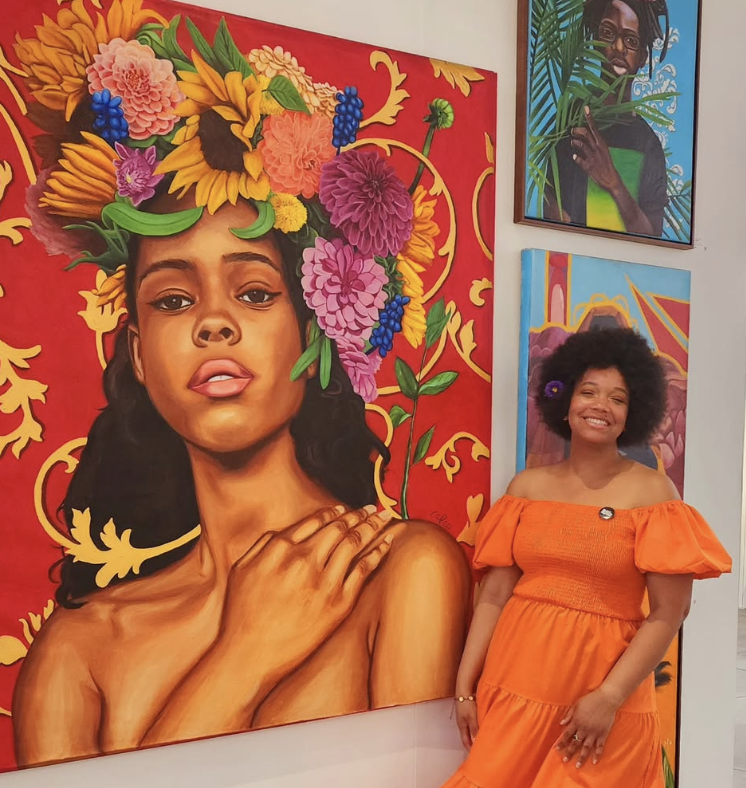
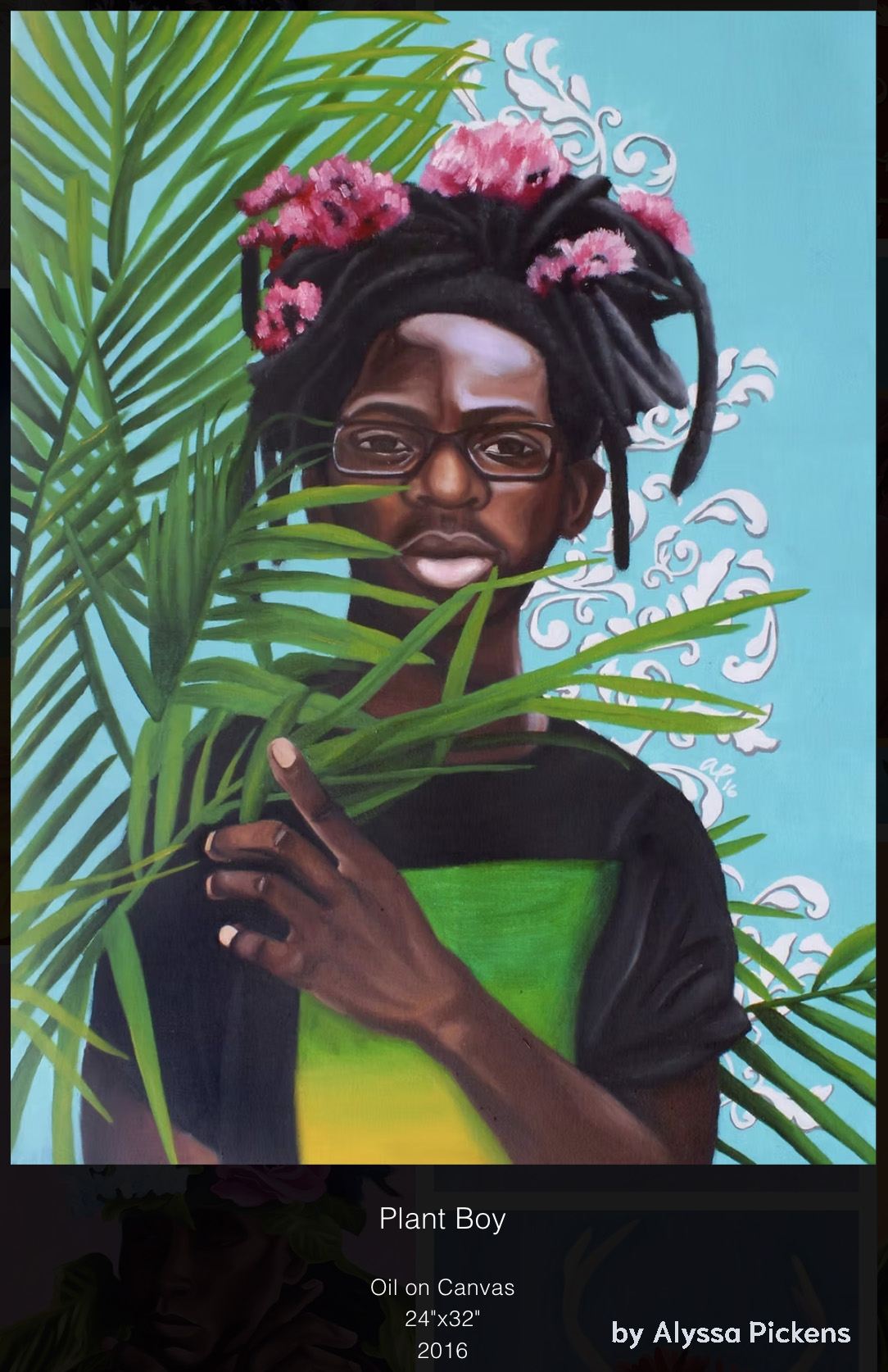
Alyssa Pickens
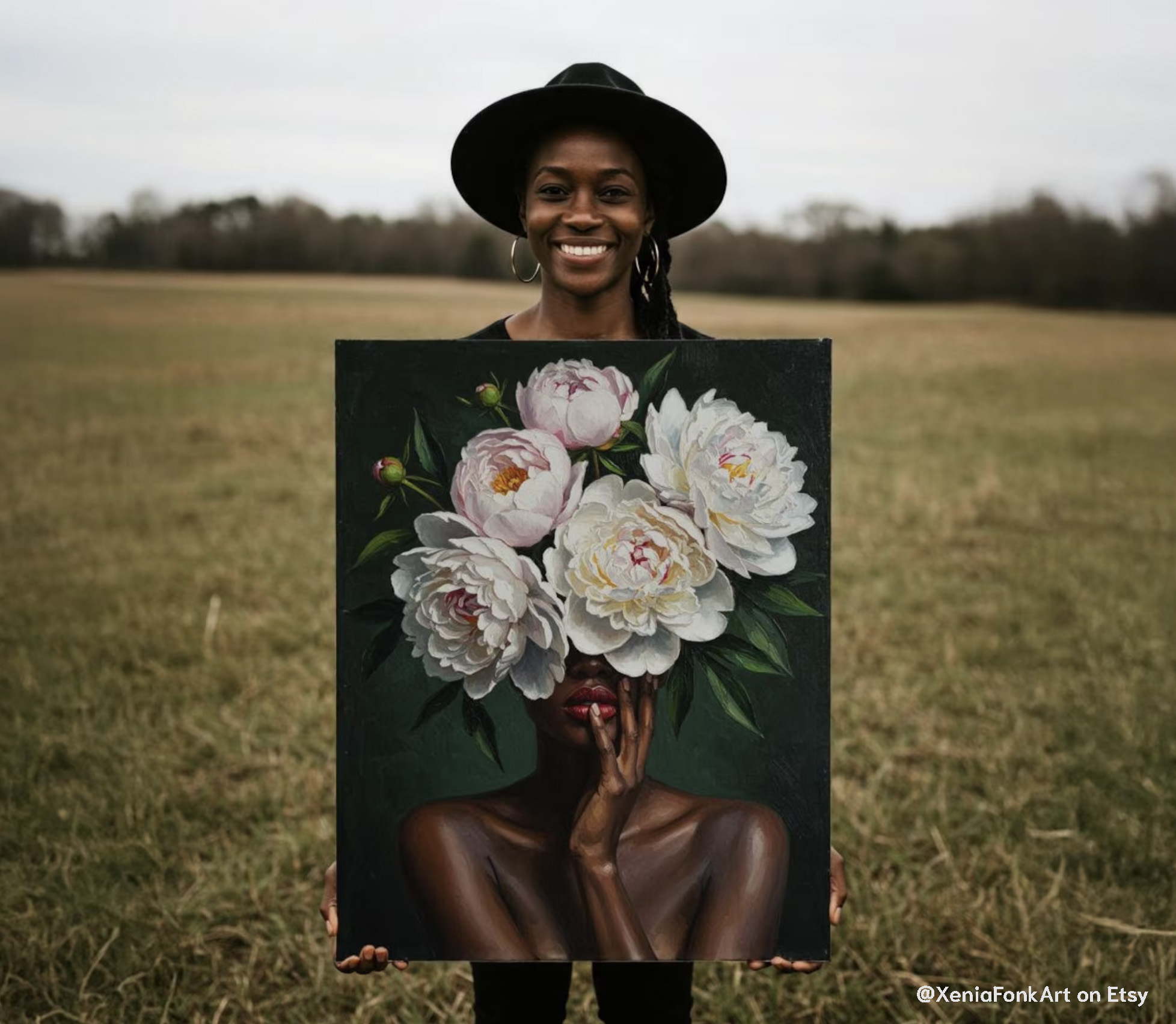
Alyssa Pickens was born in Newport News, VA and resides in the Bay Area of San Francisco, CA. She received her Bachelor of Arts in Studio Art from Christopher Newport University in 2014. Her primary medium is oil painting but she has also worked with acrylics, clay sculpture, and mixed media.
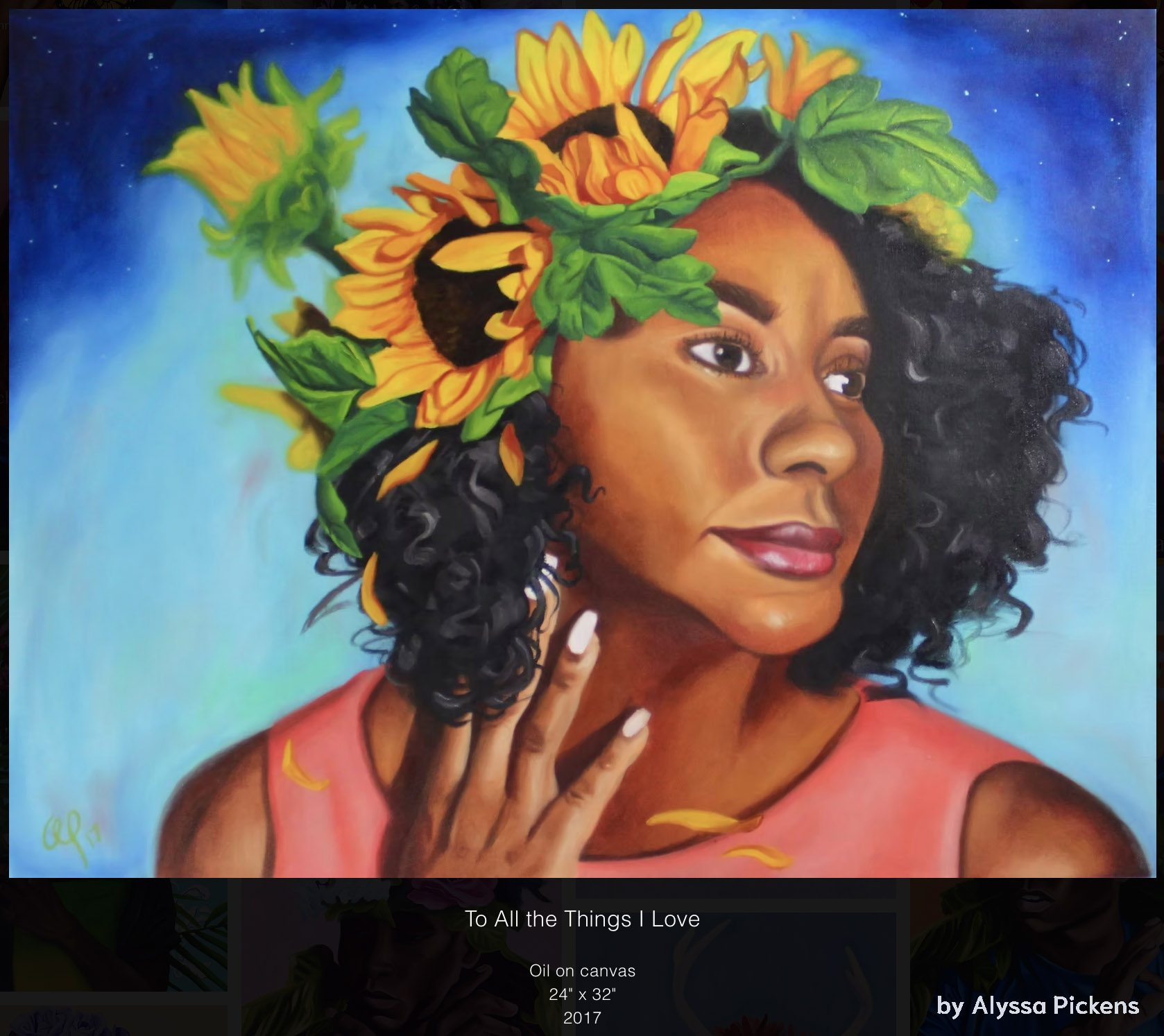
Here’s how her portrait painting journey began: “The journey to portrait painting began in 2014 when a young black man, Michael Brown, was shot and killed by a police officer. Mainstream media had painted this man as aggressive and animalistic, which would become a reoccurring pattern for black people who died at the hands of police officers and vigilantes. As a way to counteract the media, Pickens began painting portraits of people of color adorned with floral crowns and a gentle expression. Despite living in a society where black features are considered undesirable and hyper-masculine, these portraits became a way to expose the beauty and delicacy within. Pickens often paints subjects adorned with crowns made from flowers or other natural elements to further mirror the natural beauty in flowers to that of the subject. The highly saturated tones draw the viewer in and uplift the subject in a positive manner. In her paintings, these “feminine” qualities (softness, gentle, delicate) should be seen as a source of strength in black culture.” (source)
To learn more about Alyssa Pickens, here is her website and Instagram @alyssa_channelle.
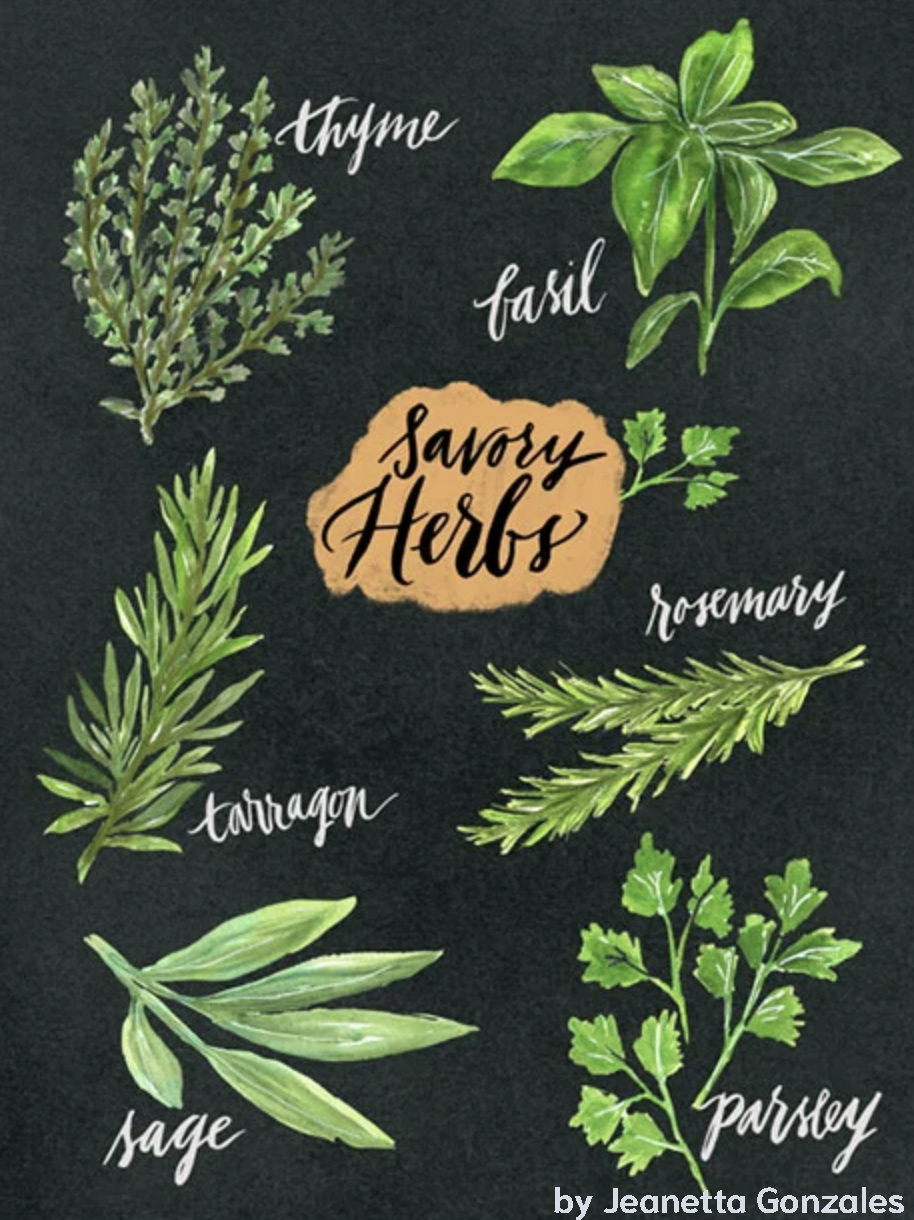
Jeanetta Gonzales
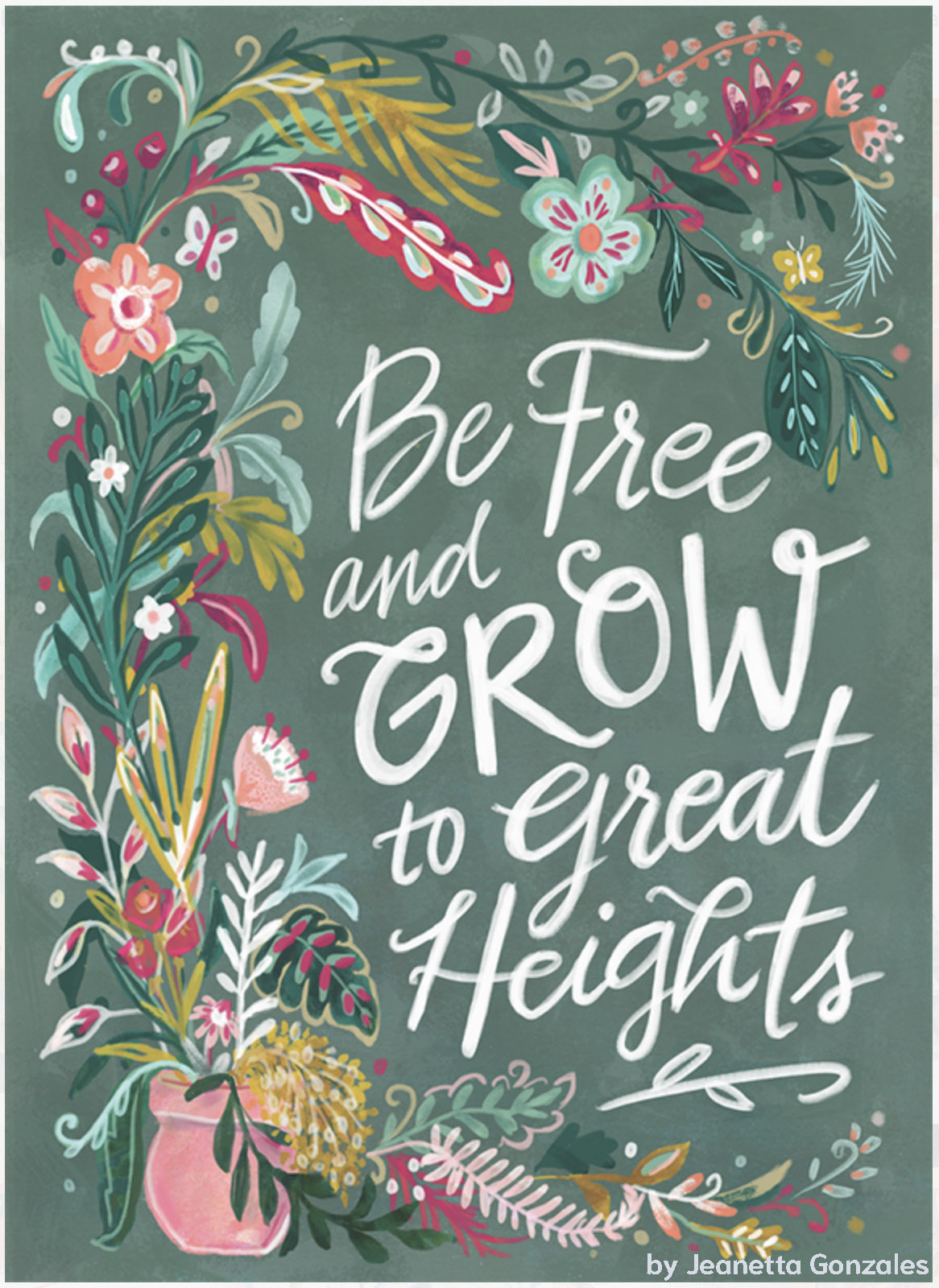
Jeanetta Gonzales is a Los Angeles based designer, illustrator and artist’s coach who describes herself as a free-spirited artist who loves nature. For her, the imperfect is beautiful. As a result, she finds inspiration in the curves, colors and textures that surround us. While Jeanetta enjoys looking at the small details, she’s not afraid to make bold statements. Using her training in Fine Art and Graphic Design, she blends the traditional and modern to capture moods and moments. Using a combination of paint, inks and digital illustration, Jeanetta creates her vibrant art that evokes happiness, energy, inspiration and positivity through her love of drawing plants, women, flowers and lettering phrases. To her, color, texture and pattern is JOY! (source)
To learn more about Jeanetta Gonzales, here is her website and Instagram @nettdesigns.
SOURCES
- Aldredge, Michelle. “The Life and Art of Horace Pippin.” Gwarlingo, 31 Jan. 2013, https://gwarlingo.com/2013/horace-pippin/.
- Amsen, Eva. “George Washington Carver Was an Artist Long before He Became a Peanut Scientist.” Forbes, Forbes Magazine, 7 Feb. 2021, https://www.forbes.com/sites/evaamsen/2021/02/08/george-washington-carver-was-an-artist-long-before-he-became-a-peanut-scientist/?sh=6c39e3081cf4.
- Collection of Collections, LLC. “Black History in Nature – Blog.” Black People with Plants, 7 Mar. 2019, https://www.blackpeoplewithplants.com/black-people-with-plants/tag/black+history+month.
- Das, S. & Lowe, M. (2018). Nature Read in Black and White: decolonial approaches to interpreting natural history collections. Journal of Natural Science Collections, Volume 6, 4 ‐ 14, http://www.natsca.org/article/2509
- Elia T. Ben-Ari, Better than a thousand words: Botanical artists blend science and aesthetics, BioScience, Volume 49, Issue 8, August 1999, Pages 602–608, https://doi.org/10.2307/1313435.
- Flannery, Maura. “Plant Humanities and Decolonial Collections.” Herbarium World, 14 Dec. 2021, https://herbariumworld.wordpress.com/2021/12/14/plant-humanities-and-decolonial-collections/.
- John Tyley and His Botanical Drawings, L: 50, Linnean Society, 29 Oct. 2020, https://www.youtube.com/watch?v=s-QEmeNRS6I. Accessed 10 Feb. 2022.
- Mark, and Tamar. “Sibonelo Chiliza.” The Artists’ Press, https://www.artprintsa.com/sibonelo-chiliza.html.
- McClure, Matthew. “Firm Challenge to Botanical Art under Way at Grootbos Florilegium.” Wanted Online, Wanted, 14 Sept. 2021, https://www.wantedonline.co.za/art-design/2021-09-14-firm-challenge-to-botanical-art-under-way-at-grootbos-florilegium/.
- Rashad Bell, and Nuala Caomhánach, Inside Black Botany: A Conversation with the Curators, New York Botanical Garden, 26 Feb. 2021, https://www.youtube.com/watch?v=cCdefpMRe4s. Accessed 15 Feb. 2022.
- Stanos, Valerie G. “The Floral Still Lifes of Horace Pippin.” Jonathan Boos, 8 June 2020, https://jonathanboos.com/flowers-four-doilies-horace-pippin/.
- Taggart, Emma. “What Is Botanical Illustration? Learn About the History of This Scientific Art Form.” My Modern Met, 25 July 2021, https://mymodernmet.com/history-of-botanical-illustration/.
- Tyrrell, Katherine. “What Is Botanical Art?” Botanical Art & Artists, 2015, https://www.botanicalartandartists.com/what-is-botanical-art.html.
Other Resources
Published through Distillations, the Science History Institute’s highly acclaimed digital content platform, Innate: How Science Invented the Myth of Race is a podcast and magazine project that explores the historical roots and persistent legacies of racism in American science and medicine.
Learn more at https://www.sciencehistory.org/distillations/podcast/origin-stories
Theatrum Botanicum by Uriel Orlow, exploring the intersection of plants and politics
Learn more at https://urielorlow.net/wp-content/uploads/THEATRUM-BOTANICUM-preface-intro-bibliography.pdf