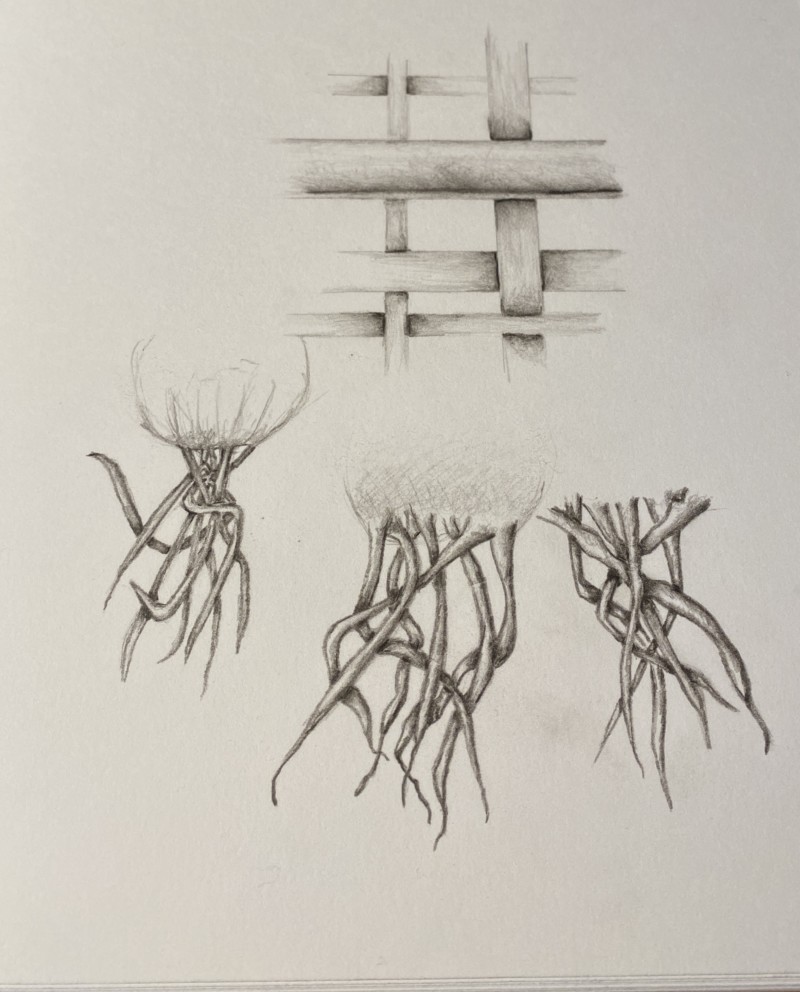
Hi Colleen- overlaps are very challenging! With the overlap drawing, it looks like the pieces are flat. Give it a try as if the pieces are cylindrical instead of flat. I posted an overlap example for cylinders on Feb 21 if you want to check it out for reference. Each piece has to be toned as a cylinder. Whether something is flat or cylindrical if it crosses over another piece, only one side should be shown having a shadow (the side furthest from the light source). If you have chop sticks or pencils, etc. you can set up a grid. When you set up the proper lighting you will see what I mean. When doing roots there should be shading as I described above, plus the roots in the back should be toned. This conveys that the lighter roots are in front and the darker roots are behind. There will also be the crossover cast shadows and individual cylindrical toning as you have shown. We talked a lot about doing roots one the last Webinar and showed examples too. Hope this helps!

Hi Colleen- overlaps are very challenging! With the overlap drawing, it looks like the pieces are flat. Give it a try as if the pieces are cylindrical instead of flat. I posted an overlap example for cylinders on Feb 21 if you want to check it out for reference. Each piece has to be toned as a cylinder. Whether something is flat or cylindrical if it crosses over another piece, only one side should be shown having a shadow (the side furthest from the light source). If you have chop sticks or pencils, etc. you can set up a grid. When you set up the proper lighting you will see what I mean. When doing roots there should be shading as I described above, plus the roots in the back should be toned. This conveys that the lighter roots are in front and the darker roots are behind. There will also be the crossover cast shadows and individual cylindrical toning as you have shown. We talked a lot about doing roots one the last Webinar and showed examples too. Hope this helps!