These leaves have a lovely quality, Hendrika. And I love the flower (?) in between them. You rendered the planes of the leaves very well; I can feel the three-dimensionality of them, and the color is nice and shimmery. My only suggestion here is to continue to work on the veining. As long-time students will tell you, leaf veining is a lifelong pursuit, and oh-so-satisfying. 🙂 My recommendations for your next leaves are: remember that leaf veins are not straight–they “wiggle” a little bit. They’re also so thin that they are barely there. You could make these secondary veins much thinner (more like the ones on the top left) and they would work very well. Veins also get thinner as they reach the leaf edge, even the midvein. So vary the width and make them less straight. You’re doing a great job! 🙂
thanks so much for that feedback Vern. I’m glad veins are considered difficult – I sure am finding them to be so. I’ll keep working on learning how to do them, and will implement your suggestions!

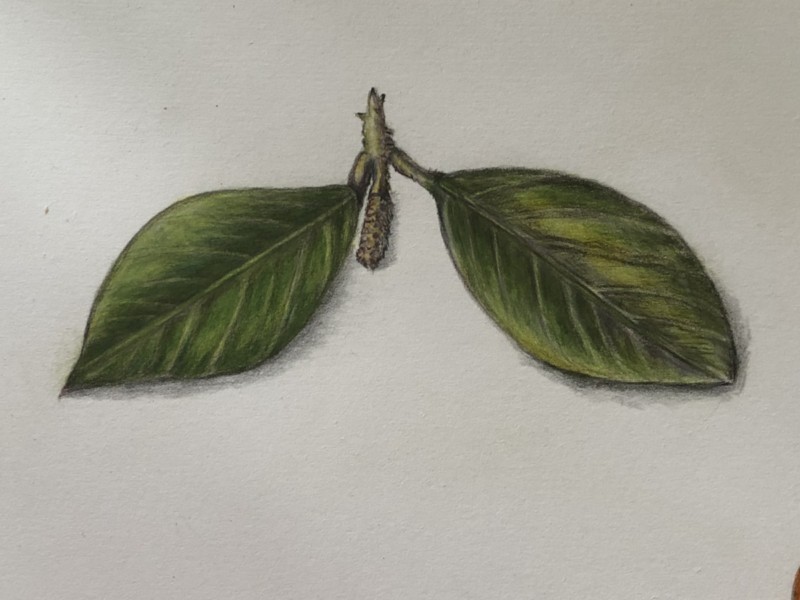
These leaves have a lovely quality, Hendrika. And I love the flower (?) in between them. You rendered the planes of the leaves very well; I can feel the three-dimensionality of them, and the color is nice and shimmery. My only suggestion here is to continue to work on the veining. As long-time students will tell you, leaf veining is a lifelong pursuit, and oh-so-satisfying. 🙂 My recommendations for your next leaves are: remember that leaf veins are not straight–they “wiggle” a little bit. They’re also so thin that they are barely there. You could make these secondary veins much thinner (more like the ones on the top left) and they would work very well. Veins also get thinner as they reach the leaf edge, even the midvein. So vary the width and make them less straight. You’re doing a great job! 🙂
thanks so much for that feedback Vern. I’m glad veins are considered difficult – I sure am finding them to be so. I’ll keep working on learning how to do them, and will implement your suggestions!