How to Identify & Illustrate The Nightshade Family
Exploring Plants in Solanaceae
By Wendy Hollender, botanical illustrator & educator
The Nightshade Family
Solanaceae
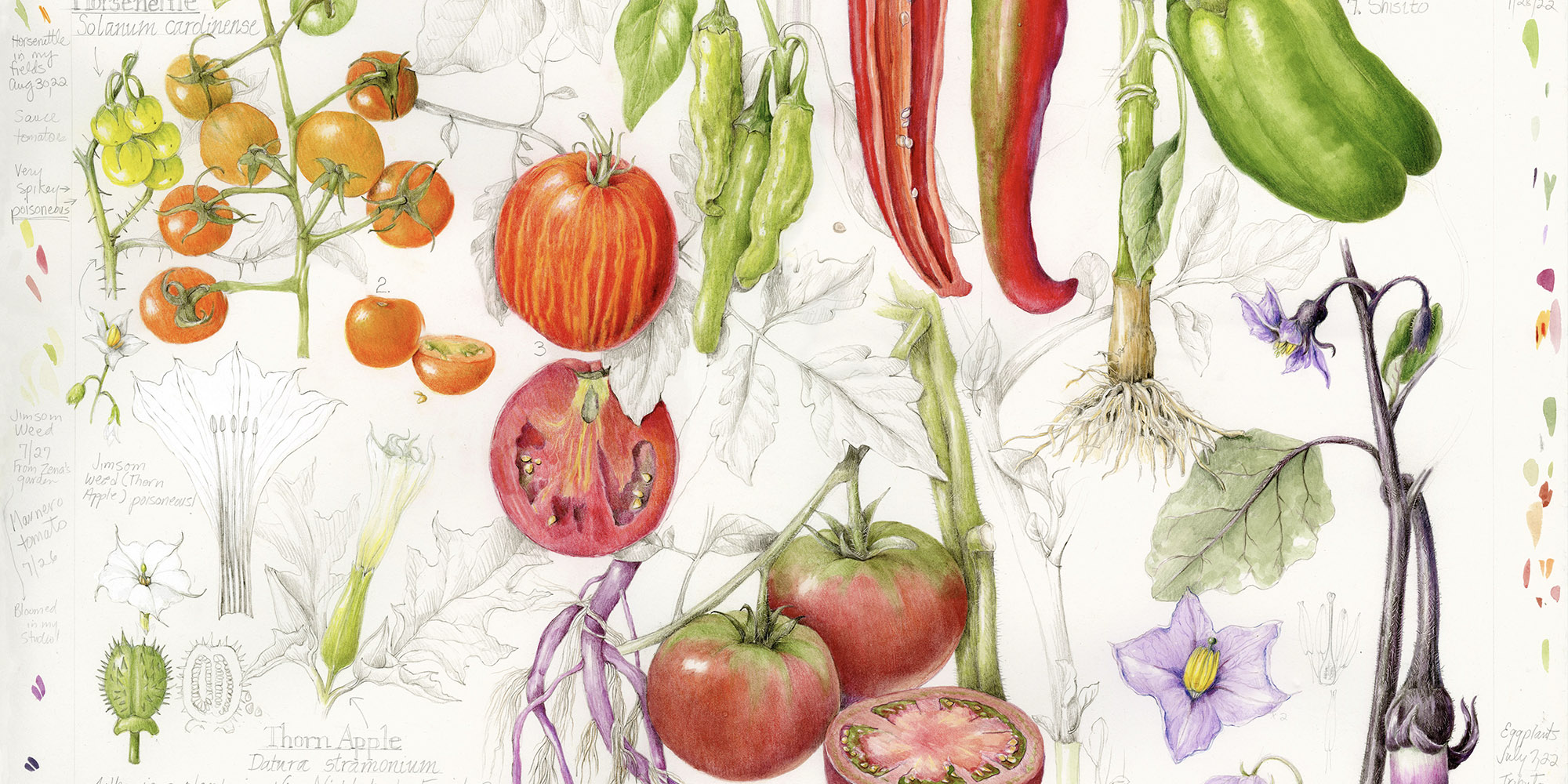
Fun Fact: The potato is not a fruit but a tuber, part of the plant’s root system. A shout out to Tributary Farm for the majority of these wonderful vegetables.
Meet the Solanaceae Family
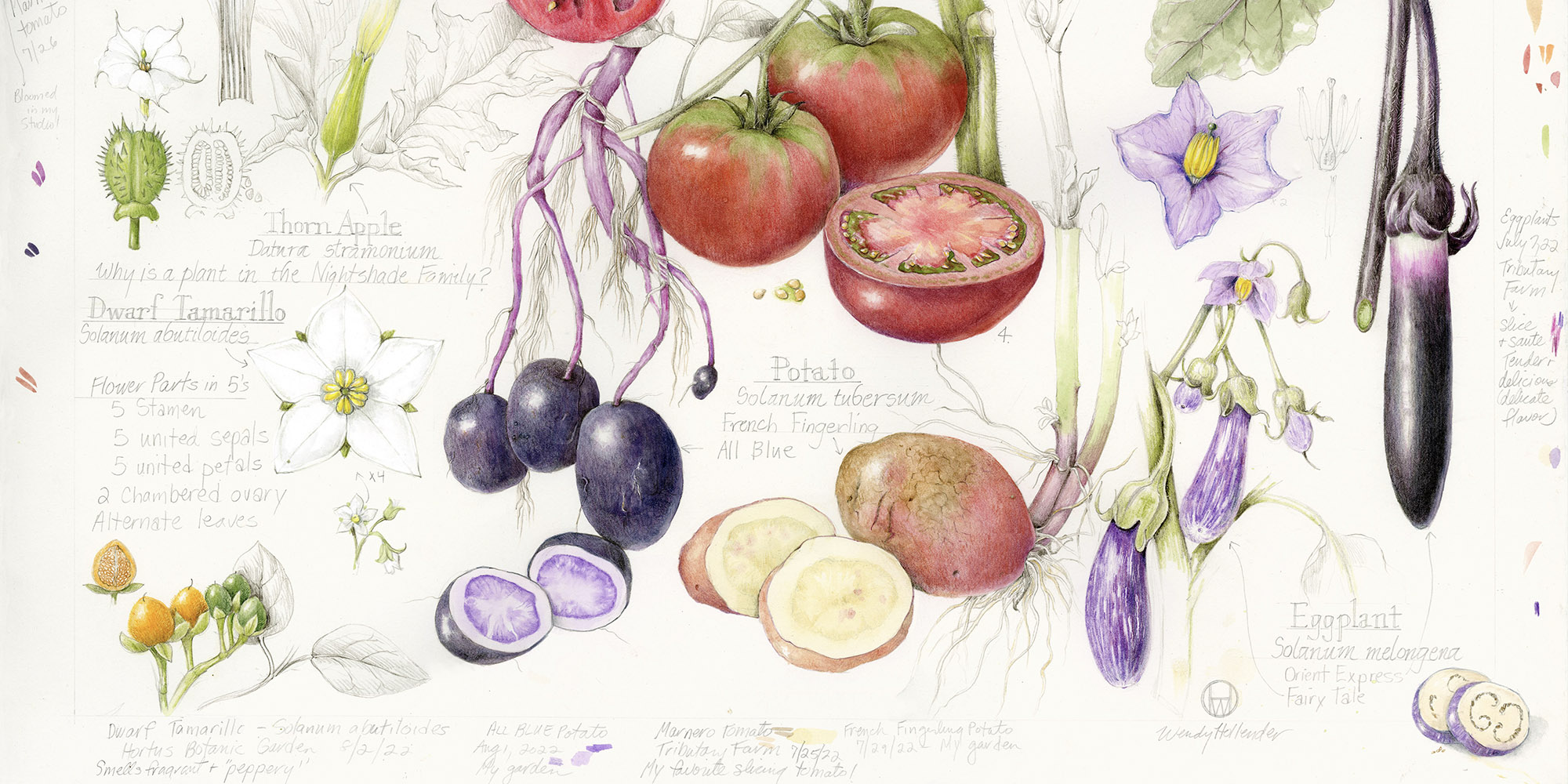
The Nightshade family encompasses over 2,700 species, ranging from beloved edibles to ornamental and even poisonous plants. Key identifying features of solanaceae family members include:
– Flower Structure: Typically, flowers have five united petals forming a star shape, five united sepals, and five stamens.
– Ovary: A two-chambered ovary often filled with numerous seeds.
– Leaves: Alternate leaf arrangement along the stem.
Learn more about the Nightshade Family
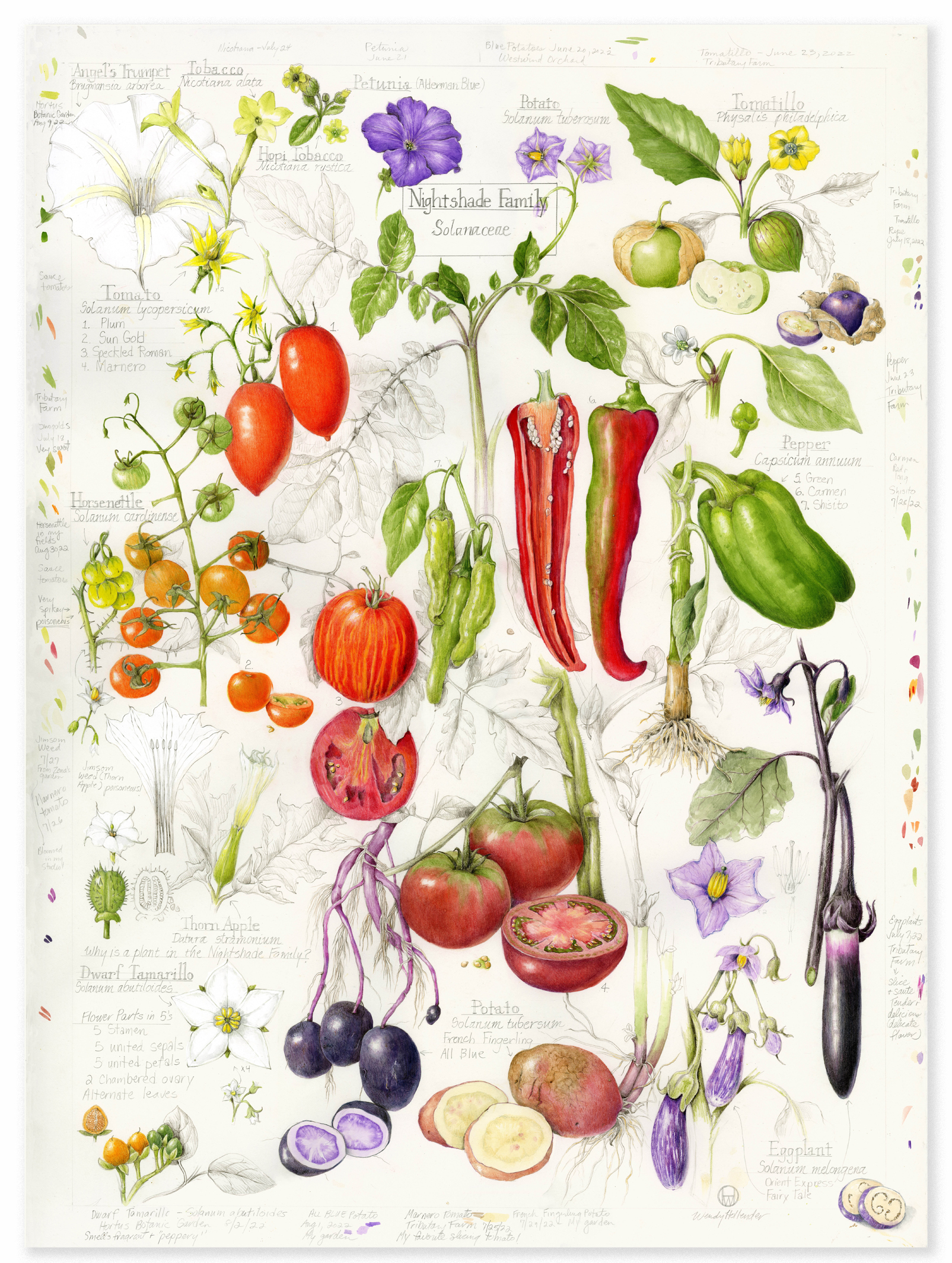
Nightshade Plant Family Portrait
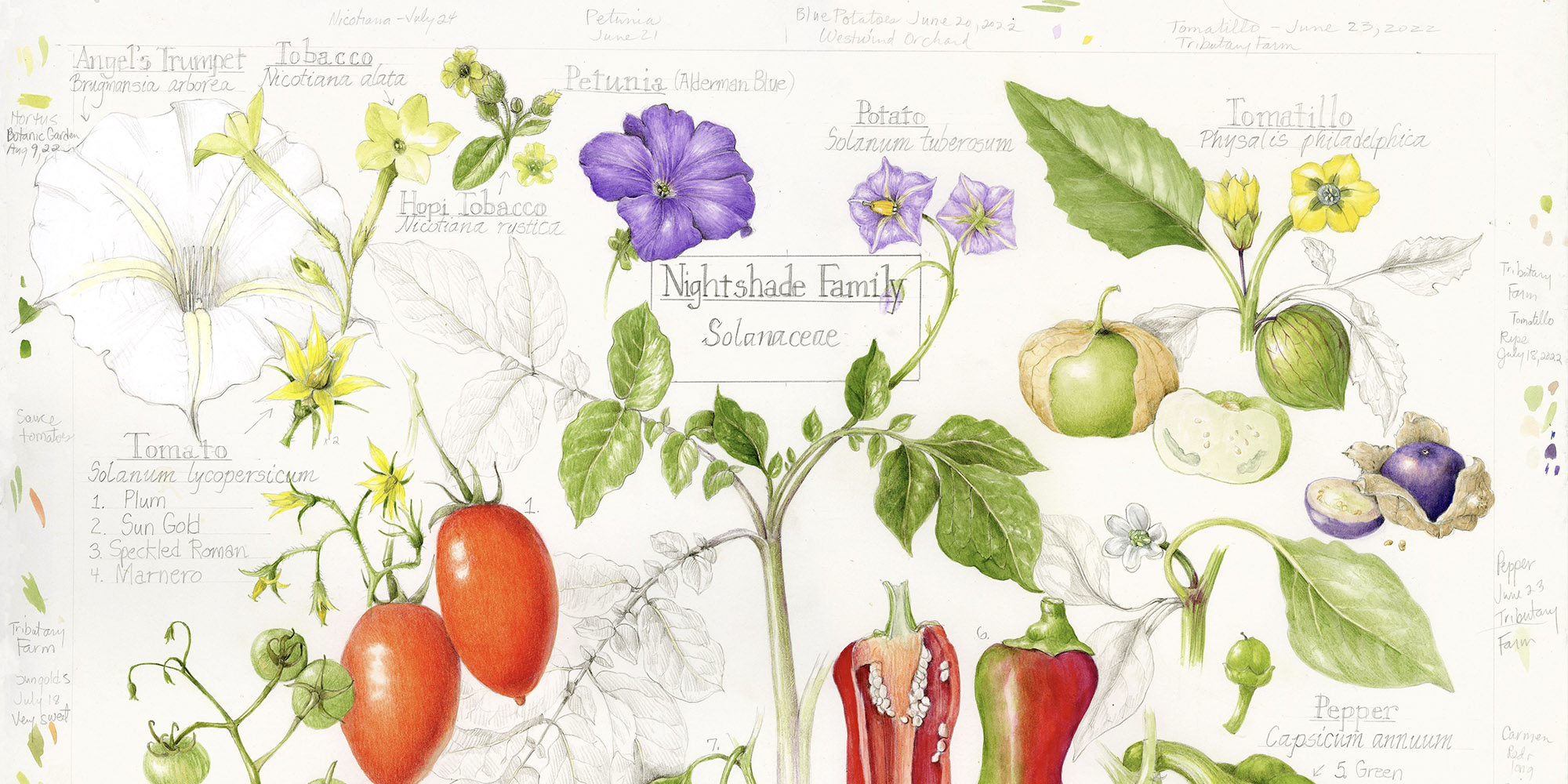
My Nightshade Family Portrait brings together various members of this diverse family, highlighting their similarities and differences. From the edible to the ornamental, each plant tells a story of connection and individuality within the Solanaceae lineage.
Plants included in this Plant Family Portrait:
- Brugmansia arborea – Angel’s Trumpet
- Capsicum annuum – Pepper – Carmen
- Capsicum annuum – Pepper – Green
- Capsicum annuum – Pepper – Shishito
- Datura stramonium – Thorn Apple – Jimson Weed
- Nicotiana alata – Tobacco
- Nicotiana rustica – Hopi Tobacco
- Petunia nana compacta – Petunia – Alderman Blue
- Physalis philadelphica – Tomatillo
- Solanum abutiloides – Dwarf Tamarillo
- Solanum carolinense – Horsenettle
- Solanum lycopersicum – Tomato – Marnero
- Solanum lycopersicum – Tomato – Plum
- Solanum lycopersicum – Tomato – Speckled Roman
- Solanum lycopersicum – Tomato – Sun Gold
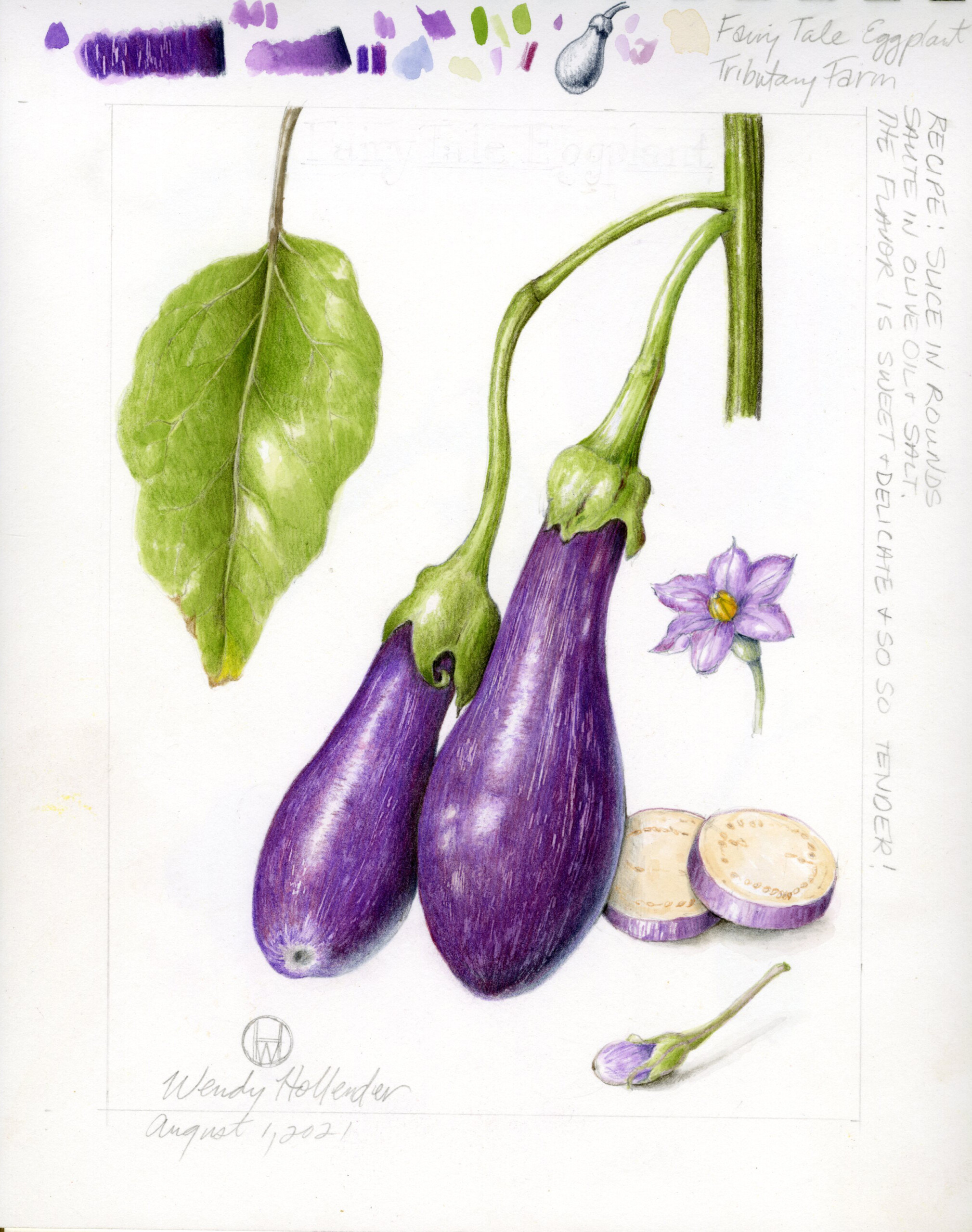
- Solanum melongena – Eggplant – Fairy Tale
- Solanum melongena – Eggplant – Orient Express
- Solanum tuberosum – Potato – All Blue
- Solanum tuberosum – Potato – French Fingerling
Purchase Plant Family Portraits Here
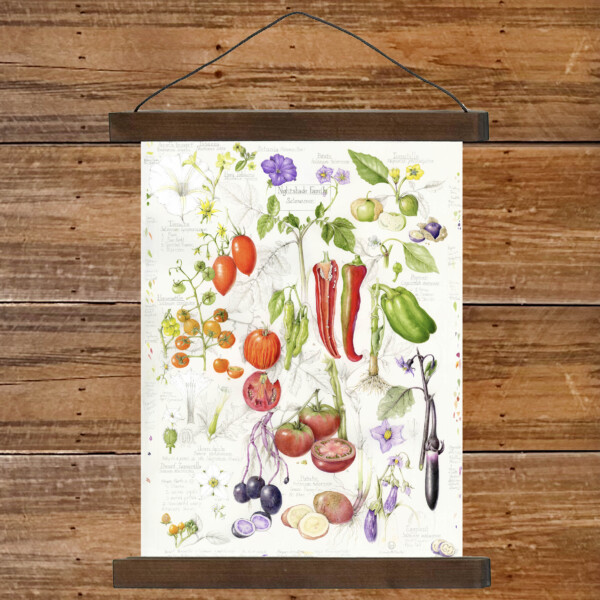
Hang your prints without the hassle! Click here for our Effortless Wooden Frames.
My goal with this series of Plant Family Portraits is to deepen people’s awareness of plants and gain an understanding of plant details. An appreciation for biodiversity is an important part of our wellbeing. May we all delight in nature’s fascinating architecture and colors, appreciate our environment, and how precious it is to protect.
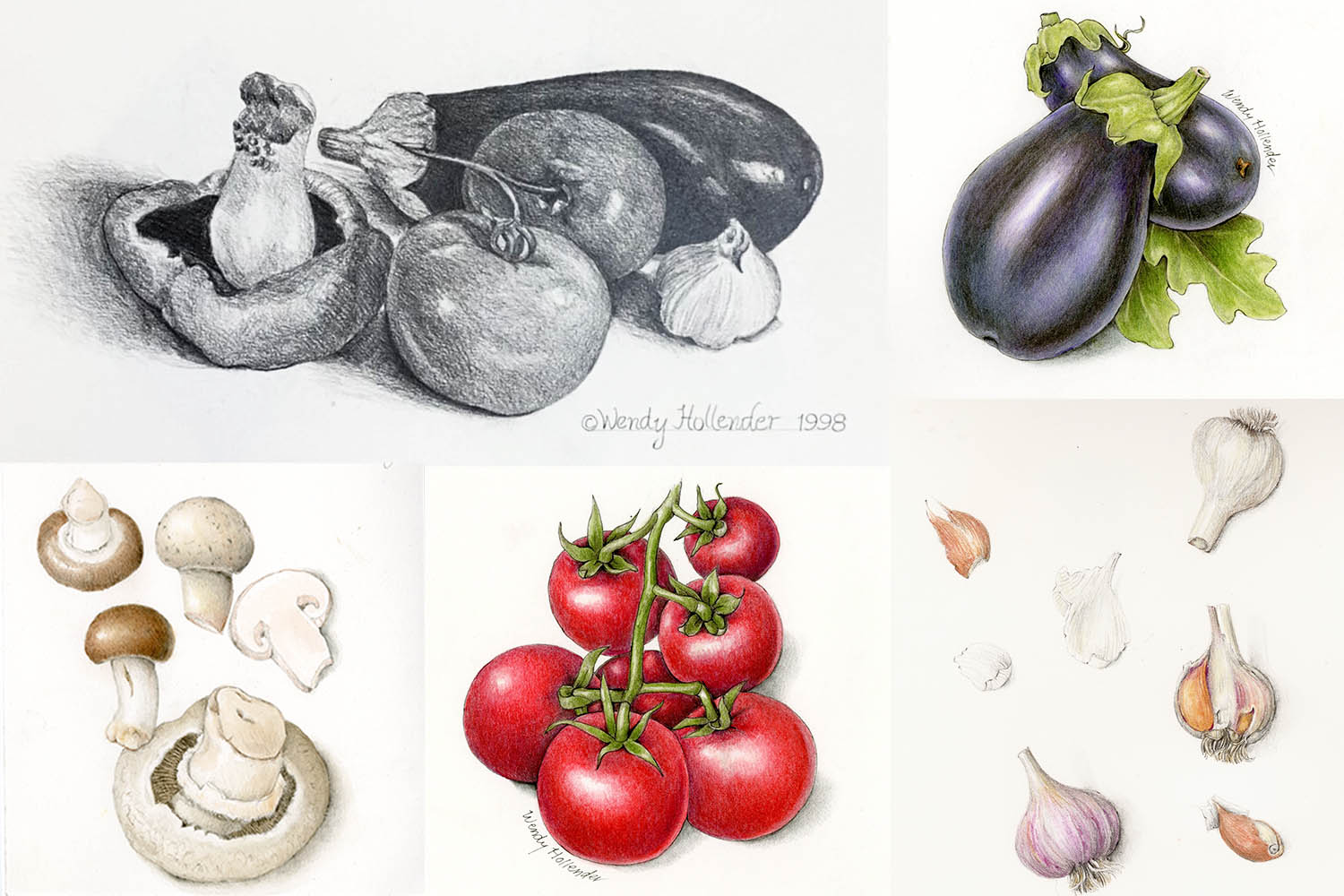
Drawing Tips for Nightshade Plants
Capturing the essence of these plants requires attention to their unique forms and textures. Here are some pro tips to guide you toward realistic botanical illustrations of plants in the nightshade family:
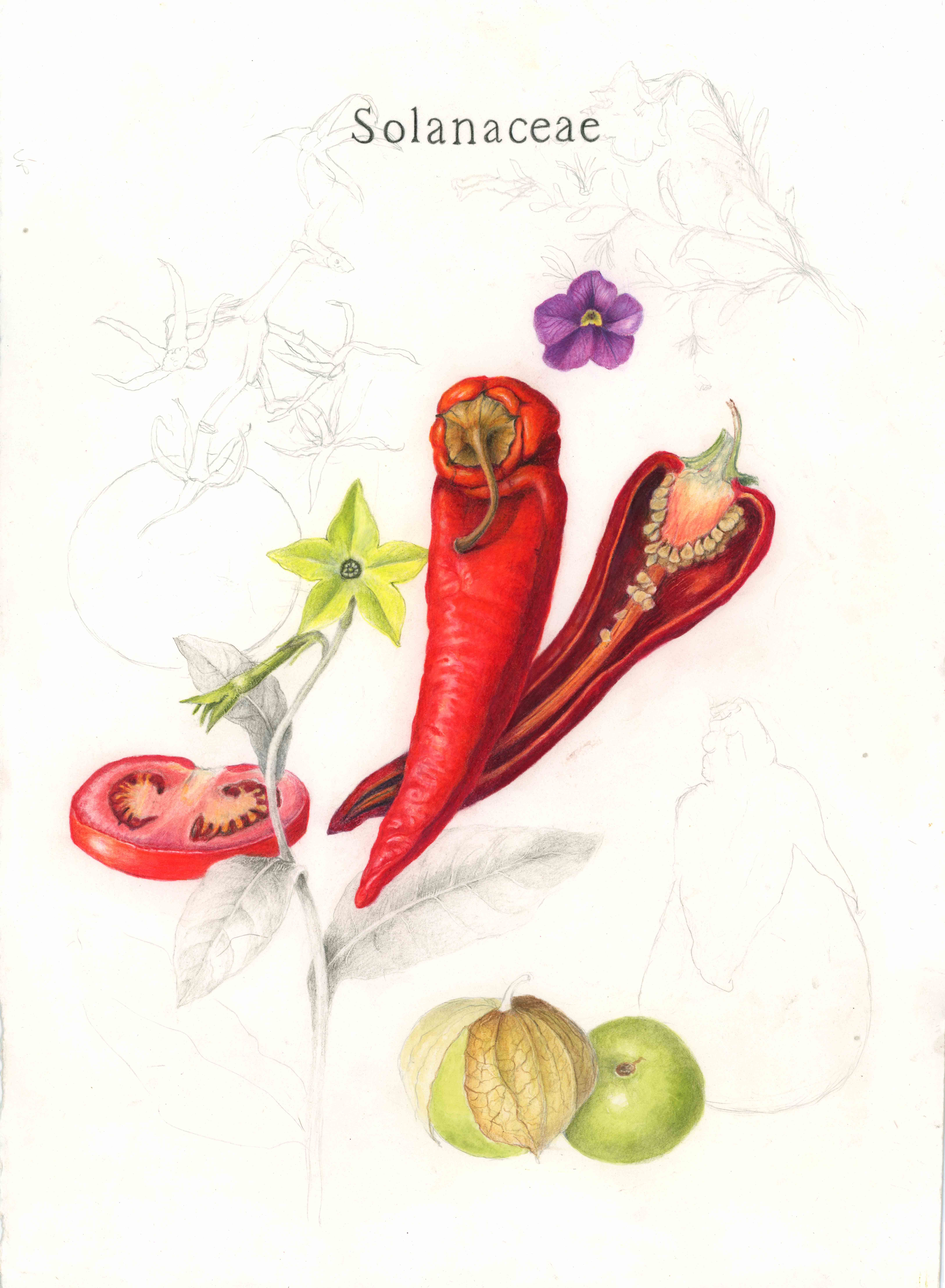
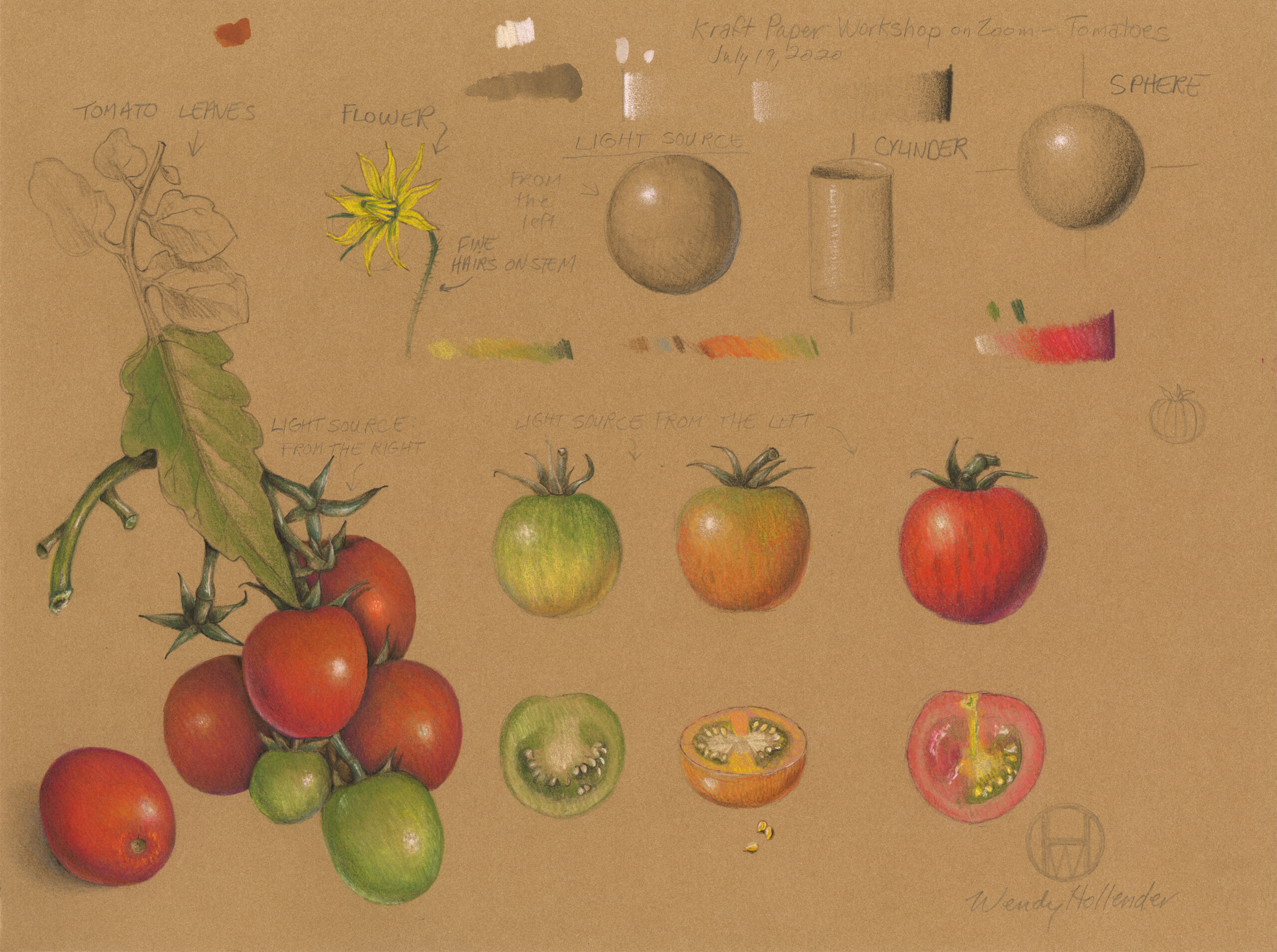
Tomatoes & Peppers
Shape & Form
Begin with basic geometric shapes—spheres for tomatoes and cylindrical forms for peppers—to establish accurate proportions. For best results, use accurate measurements!
Color & Texture
Use watercolor washes to lay down base colors and let it dry completely. Then slowly build layers, alternating between colored pencils and watercolor, to add depth and detail. Remember to leave highlights white to convey the glossy skin.
Have questions about color mixing, blending, or matching? We have answers on our color theory blog here.
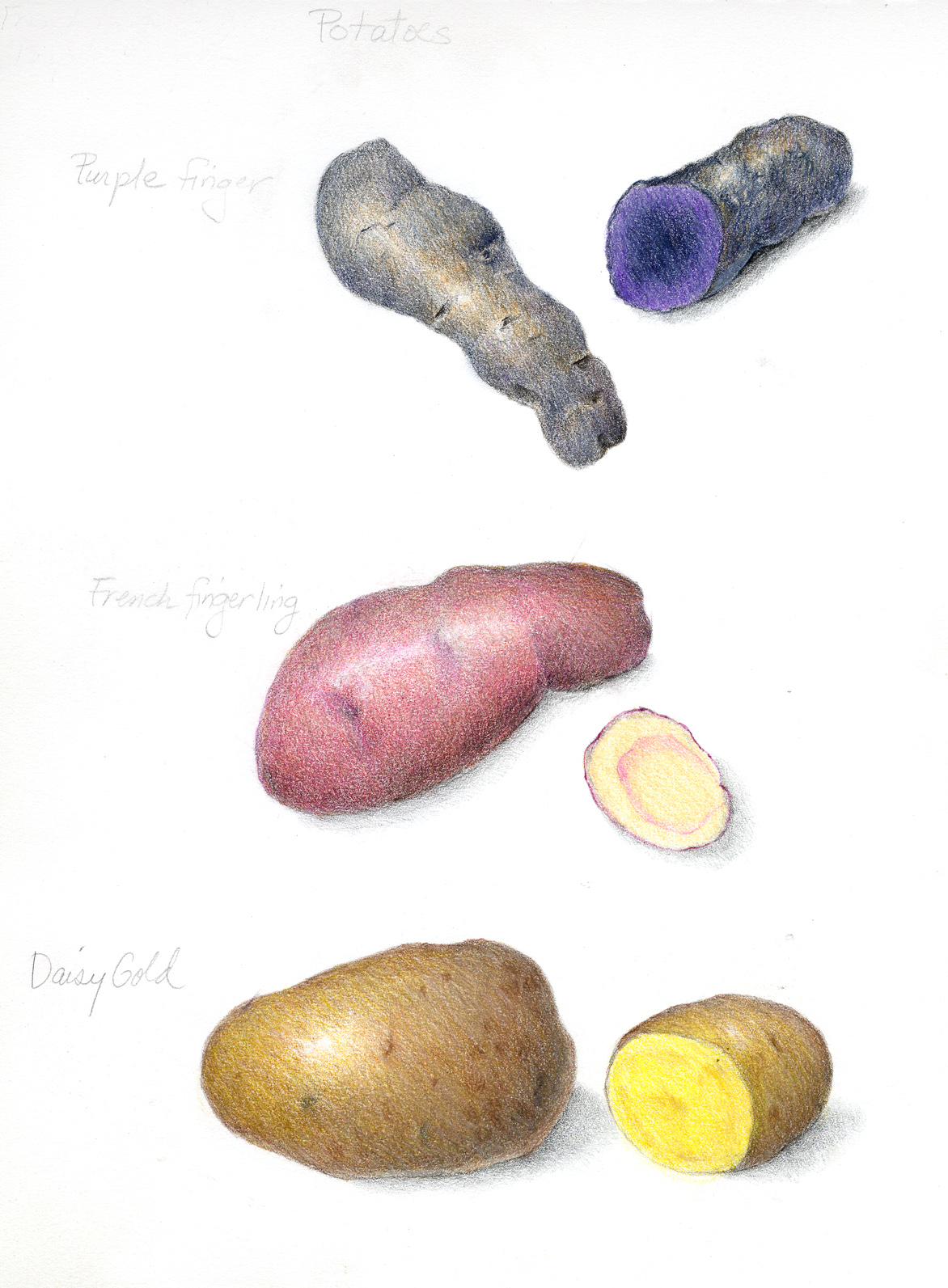
Potatoes
Surface Texture
Potatoes have a matte, textured surface. Employ dry brush techniques with colored pencils to depict this quality.
Eyes & Sprouts
Include the “eyes” and any sprouting areas to add realism and indicate growth stages.
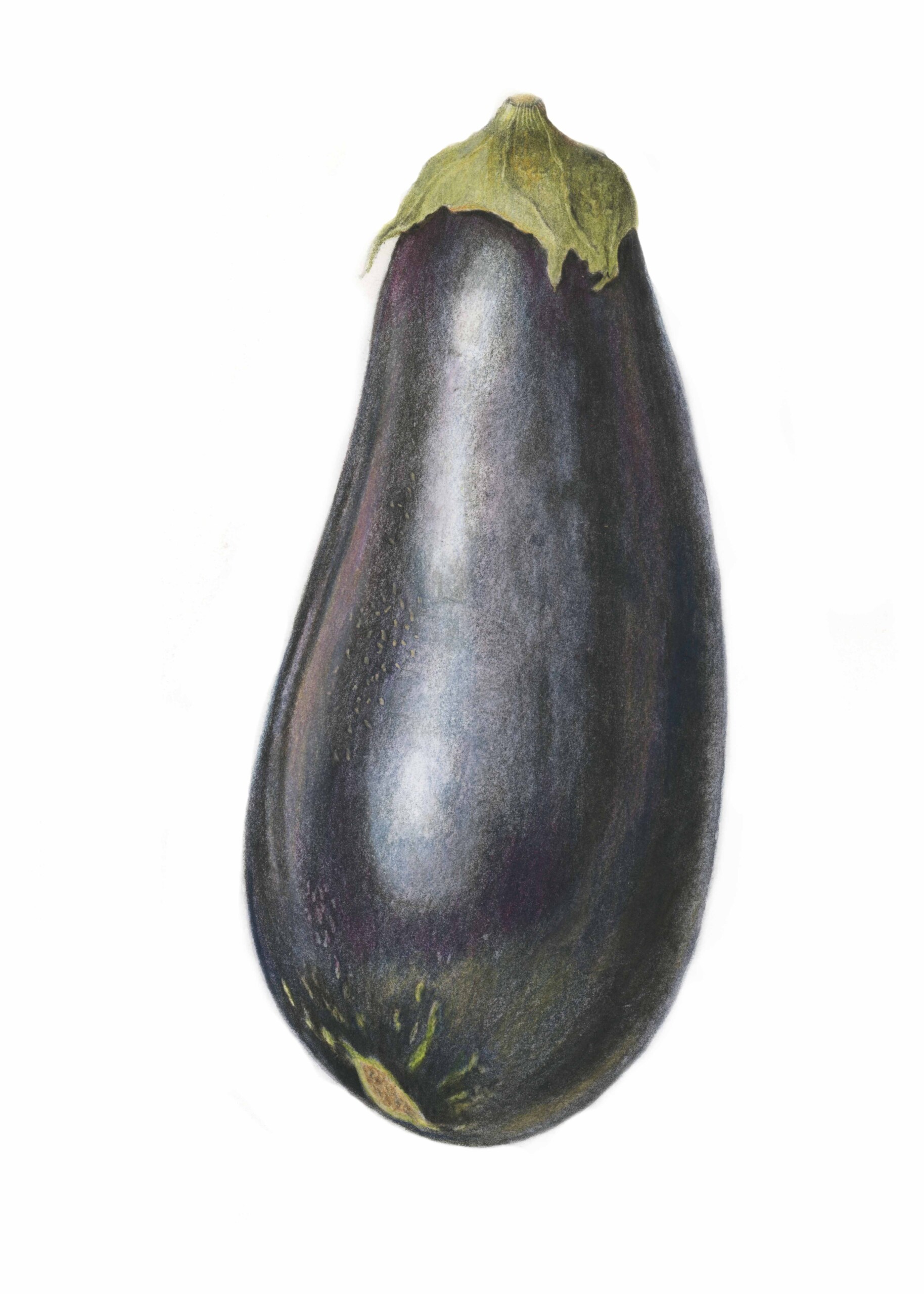
Eggplants
Shiny Surface
Achieve the characteristic sheen by leaving a bright white highlight, gradually building up layers of color, and blending them smoothly.
Dark Color
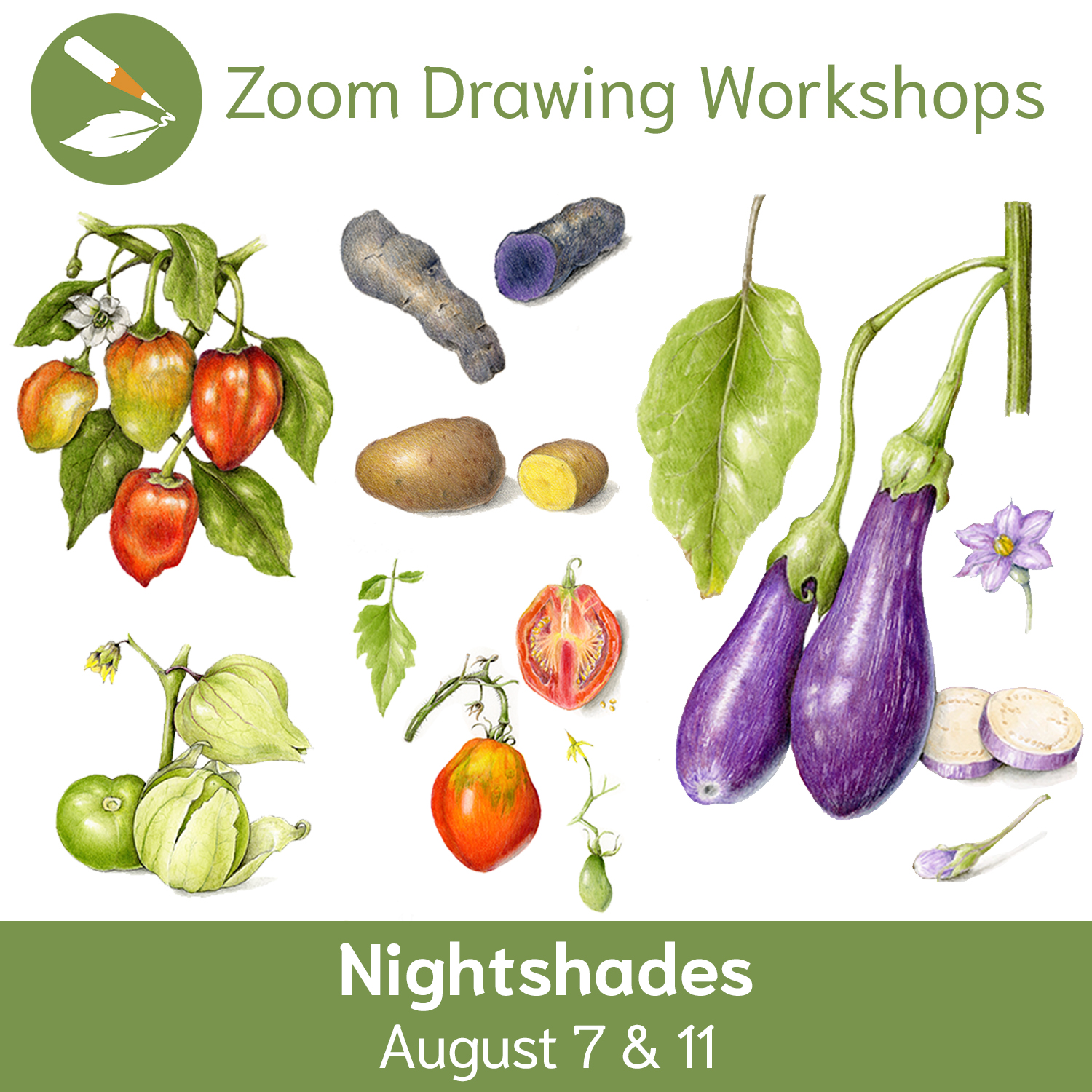
Don’t be afraid to embrace the dark side! Watch the recording from our Dark Colors Zoom Drawing Workshop for step-by-step guidance.
Calyx Details
Pay attention to the green calyx at the top, noting its shape and how it connects to the fruit.
Leaves
Vein Structure
Observe the leaf’s vein pattern—most nightshades have a netted venation. Lightly sketch the main vein and branch out to secondary veins. Here are 9 simple steps to draw a realistic leaf.
Light & Shadow
Consider the leaf as having two planes, like an open book. One side will catch more light, while the other falls into shadow. This approach adds dimension to your drawing. Learn more about drawing leaves here.

Flowers
Petal Arrangement
Nightshade flowers have five petals fused at the base. Sketch the overall star shape first, then refine each petal. (Practice drawing a single petal with the exercise in this blog post on drawing tulips.)
Reproductive Parts
Include stamens and pistils, noting their positions and proportions relative to the petals. Learn more about understanding flowers here
Embrace the Drawing Process
Drawing botanical subjects is not just about replicating their appearance, but also about observing and understanding their structure and growth. Here are some reflective questions to enhance your practice. By contemplating these aspects, your illustrations will not only be accurate but also imbued with a deeper appreciation for the plant’s essence.
My goal with this series of Plant Family Portraits is to deepen people’s awareness of plants and gain an understanding of plant details. An appreciation for biodiversity is an important part of our wellbeing. May we all delight in nature’s fascinating architecture and colors, appreciate our environment, and how precious it is to protect.
Learn about other Plant Families